

Disposable vapes are not safe. They are widely considered less harmful than cigarettes because there is no combustion or tar, but they still deliver addictive nicotine that raises heart rate and blood pressure, and the long-term lung and heart data remain immature. A single disposable can hold the nicotine of one to two packs of cigarettes. If you want to stop, free evidence-based help exists: Texans can call the Texas Tobacco Quitline at 1-877-YES-QUIT (1-877-937-7848) or visit YesQuit.org for up to 8 weeks of free nicotine patches, gum, or lozenges, or the national line 1-800-QUIT-NOW (Spanish: 1-855-DEJELO-YA / 1-855-335-3569). These products are for adults 21+ only and contain nicotine, which is addictive. We do not sell or market our products as a quit aid.
Published June 2026 | Reviewed for factual accuracy and Texas compliance by the El Paso Smoke Shops team | Informational only, not medical advice
At El Paso Smoke Shops, our Hosts get asked the same hard questions across the counter every week, and Guests deserve answers that are not dressed up to sell something. This post is informational only. We are a licensed El Paso vape retailer, not a doctor, and nothing here claims our products are safe, healthy, or a way to quit smoking. What follows is the honest science as it stands in 2026, sourced to the bodies that produced it (CDC, FDA, the Cochrane reviews, the Lancet, Public Health England, and Texas DSHS), with the debates left in.
Texas Tobacco Quitline: 1-877-YES-QUIT (1-877-937-7848) or YesQuit.org. Free and confidential for Texans 13 and up, with up to five coaching sessions and up to 8 weeks of free nicotine replacement therapy shipped to eligible callers 18 and older. Spanish coaching: 1-855-DEJELO-YA (1-855-335-3569).
National line: 1-800-QUIT-NOW. We do not sell or market our products as smoking-cessation aids, and no e-cigarette is FDA-approved to quit smoking. If you want to quit, the help above is the place to start.
What are the health risks of disposable vapes?
Disposable vapes carry real risks: nicotine addiction, raised heart rate and blood pressure, airway irritation, and exposure to flavoring chemicals and fine particles whose long-term lung effects are still being studied. Vaping is not risk-free, and calling it “just water vapor” is false. The aerosol is a chemical mist, not steam.
Here is what the current evidence actually supports, separated from the hype:
- Nicotine itself raises heart rate and blood pressure and can stress the cardiovascular system. It is also powerfully addictive, which is the core risk that keeps people using.
- Adolescent brain harm. Research is consistent that nicotine can disrupt the developing brain, which keeps maturing to about age 25, affecting attention, learning, memory, mood, and impulse control. This is a central reason these products are restricted to adults 21+.
- Airway and lung irritation. A 2024 systematic review (119 studies, searched through January 2024) found that non-smokers who vape had a higher risk of respiratory symptoms (relative risk around 1.90) and increased airway resistance, though it did not clearly show a drop in standard lung-function measures (FEV1/FVC). Diacetyl, the flavoring chemical behind “popcorn lung” (bronchiolitis obliterans), is the headline historical example, but that risk is rare in regulated nicotine products today and is largely a story about older, unregulated e-liquids.
- EVALI. See the dedicated section below. The short version: the 2019-2020 outbreak was an illicit-THC and vitamin E acetate problem, not a regulated nicotine problem.
Did vaping cause EVALI?
No. EVALI was overwhelmingly tied to vitamin E acetate used as a cutting agent in illicit, street-market THC cartridges, not to regulated nicotine vapes. EVALI stands for E-cigarette or Vaping product use-Associated Lung Injury, the outbreak that spiked in August 2019 and peaked that September.
The numbers, dated for precision: as of February 18, 2020 (the CDC’s final tally before it stopped tracking), the CDC reported 2,807 hospitalized EVALI cases or deaths, with 68 confirmed deaths across 29 states and Washington, D.C. The CDC found vitamin E acetate in the lung fluid of 48 of 51 EVALI patients tested and in none of the healthy comparison group. Among patients with usage data, 82% reported using THC-containing products, 33% reported using THC products exclusively, and 78% obtained them only from informal sources like friends, dealers, or online sellers. Cannabinoid vapes of every kind are banned from sale in Texas under SB 2024 and were never part of our shelves. This entire category at our stores is nicotine and zero-nicotine only.
Texas SB 2024, signed by Gov. Abbott on June 20, 2025 and effective September 1, 2025, raised the penalty for selling prohibited e-cigarette products from a Class B to a Class A misdemeanor (up to 1 year jail and a $4,000 fine per offense). The law bans selling or marketing disposable e-cigarettes manufactured in, or marketed as made in, China or other designated foreign-adversary nations (China, Cuba, Iran, North Korea, Russia, and Venezuela’s Maduro regime); bans all cannabinoid vapes (THC, Delta-8, Delta-10, HHC, CBD and their derivatives), alcohol, kratom, kava, mushroom, and tianeptine vapes; and bans minor-appealing or disguised designs (candy or cartoon imagery, or devices shaped like pens, highlighters, phones, or toys). US-made nicotine devices, US-filled e-liquid, and refillable systems remain legal.
On the China-origin clause: industry groups including the Vapor Technology Association and ECIGRUSA sued under the Constitution’s foreign-commerce clause and First Amendment, but a federal judge declined to halt the law, so it took effect on schedule and the broader challenge remains pending as of 2026. It is both in effect and contested. Texas does not maintain a PMTA product registry; instead every location that sells e-cigarettes must hold its own Texas Comptroller retailer permit ($180 per two-year period per location, renewing May 31 of even years), which our stores carry. Locally, El Paso prohibits vaping in indoor public spaces, restaurants, and bars, even though Texas has no statewide indoor-vaping ban. If a product seems too cheap, too candy-themed, or comes from an unknown source, treat it as a red flag.
Who is allowed to buy disposable vapes?
Adults 21 and older, with valid photo ID, in person. Federal Tobacco 21 sets the floor at 21 for everyone, with no military exception. Our Hosts card anyone who looks under 30, and we verify in person at the counter because nicotine products cannot be legally shipped to consumers. That is exactly why our model is same-day in-store pickup across our 9 El Paso and Canutillo locations rather than mail order.
How many puffs of a vape a day is bad?
There is no proven “safe” daily puff count, and the honest answer is that the puff number matters far less than how dependent you become. A 5% (50 mg/mL) disposable holds enough nicotine that a few hundred puffs a day can equal the nicotine content of one to two packs of cigarettes. Note that this is content, not a measured absorbed dose, and it is not a harm comparison.
A useful gut check that has nothing to do with the box number: if you reach for the device first thing in the morning, feel anxious without it, or notice you have stopped counting, your dependence is high. That is the signal to think about cutting down, not the digital readout. For the math on why those box numbers are inflated in the first place, read on.
Why is my disposable’s puff count so much lower than the box says?
Because the e-liquid volume is real but the advertised puff number is a marketing figure, and it is commonly inflated 4 to 10 times over what is physically realistic. There is one international lab standard for a “puff” (CORESTA Recommended Method 81 / ISO 20768: a 55 mL puff over 3 seconds, taken every 30 seconds), and manufacturers almost never use it for their box claims because shorter draws produce a bigger headline number.
The physics: roughly 1 mL of e-liquid yields about 100 to 300 real puffs. A 2026 analysis of disposable models found the industry-average claim had climbed to about 1,146 advertised puffs per mL, several times the realistic figure. Independent lab testing (Robertson et al., ACS Omega, July 2025) tested 25 disposables and found that 10 of 25 contained significantly less nicotine than the label claimed, and every Geek Bar product tested held roughly half its advertised nicotine. That same study found all 25 devices contained WS-23 synthetic coolant, the “ice” agent that lets people take bigger, longer pulls, which burns through the tank faster than the short lab puffs used to generate the box number.
Because the puff number is marketing, compare value on price per mL, a verifiable physical spec, not on price per advertised puff. Here is how our shelf actually shakes out. Our 22 mL One Tank 40K at $17.99 is about $0.82 per mL, the best value-per-mL big tank we carry. Our 18 mL Oak 35K (Ripe Vapes) at $17.99 is about $1.00 per mL. Our 18 mL Lost Mary MT35000 at $27.99 is about $1.55 per mL, and our 18 mL Geek Bar Pulse X 25K at $39.99 is about $2.22 per mL, the priciest per mL on our shelf. Reading per advertised puff makes everything look like a fraction of a cent (the One Tank’s claimed 40,000 puffs at $17.99 pencils out to about 0.045 cents per puff), but those box puffs are inflated, so price per mL is the figure that actually compares devices. Live per-store pricing is on each product page; the prices here are what we charge in store.
Does a vape really contain as much nicotine as a pack of cigarettes?
In nicotine content, yes, a single disposable can match or exceed a pack, but that is content in the tank, not the dose your body absorbs. The math is simple: total nicotine equals strength times volume. A 5% (50 mg/mL) device holding 2 mL contains about 100 mg of nicotine. JUUL stated that a 5% pod (about 40 mg of nicotine) is roughly equivalent to one pack of cigarettes in nicotine content.
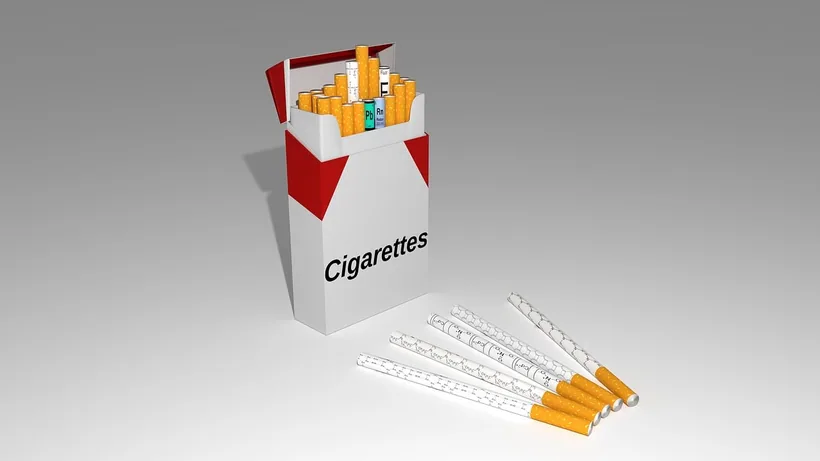
For context on absorbed dose, a smoked cigarette delivers roughly 1 to 2 mg of absorbed nicotine, and a single vape puff delivers somewhere around 0.05 to 0.5 mg. We share these numbers as nicotine-content facts, not as a harm claim. The point is practical: high-strength disposables carry a lot of nicotine, which is why dependence builds quickly and why these are 21+ products.
People often ask whether vaping is cheaper than smoking. On the box numbers it looks dramatic, but remember those puff counts are inflated, so treat this as a rough cost comparison, not a harm comparison. Our cigarette packs of 20 run from about $4.36 (Mohawk) to $11.47 (Natural American Spirit), averaging roughly $7.34, and a 20-pack is about 240 puffs. That works out to roughly 1.8 cents per puff for the cheapest pack, about 3.1 cents per puff at the average, and about 3.8 cents per puff for a $9.23 pack of Marlboro. By the manufacturers’ claimed puff counts, our disposables run from about 0.045 cents per puff (One Tank 40K, $17.99 / 40,000) up to about 0.44 cents per puff (Juice Head 5K, $21.99 / 5,000), with a $27.99 Lost Mary MT35000 at about 0.08 cents per puff. So on paper a vape is cheaper per advertised puff, but the real-world gap is smaller because the box numbers overstate puffs. None of this makes either product safe.
What is the difference between nicotine salt and freebase, and which is stronger?
They are the same nicotine molecule at different pH, and at equal strength nicotine salt tends to deliver more nicotine to the blood while feeling smoother. Nearly every disposable uses nicotine salt, which is why a 5% device inhales smoothly instead of feeling like sandpaper.
- Freebase nicotine sits at a high pH (about 8 to 9) and gives the sharp, peppery throat hit that higher-power, lower-strength e-liquids are known for.
- Nicotine salt is made by adding an acid (usually benzoic acid), which lowers the pH to about 5 to 6. That makes even very high strengths (20 to 50 mg/mL) inhale smoothly, which is exactly what enabled high-strength pods and disposables.
- The strength conversion: mg/mL divided by 10 equals the percent. So 5% = 50 mg/mL, 3% = 30 mg/mL, 2% = 20 mg/mL. 0% means nicotine-free.
- The blood-nicotine evidence: a randomized crossover study in humans found that at an equal 20 mg/mL, salt reached about 1.8 times the peak plasma nicotine of freebase (Cmax 5.4 ng/mL versus 3.0 ng/mL, with roughly 46% higher AUC and a similar time to peak); at 40 mg/mL the salt reached about 12.0 ng/mL. The leading explanation is that the smoother salt aerosol lets people inhale more deeply, rather than salt being intrinsically faster per molecule, a mechanism that is still debated.
Is it safer to vape than to keep smoking, and is vaping 95 percent healthier?
The widely quoted “95% less harmful” figure is a contested 2015 expert estimate, not a measured fact, and the honest bottom line is that vaping is not safe. We can explain where the number came from, but we will not use it to market what we sell.
- Origin. The 95% figure comes from an August 2015 Public Health England evidence review, which traced it to a single 2014 expert-panel exercise (a multi-criteria decision analysis by David Nutt and colleagues, European Addiction Research, 2014) of about 12 people scoring their own opinions on relative harm. It is an estimate of relative risk versus cigarettes, never a statement that vaping is safe.
- The pushback. The Lancet published an editorial that same month (“Public Health England’s Evidence-based Confusion”) arguing the figure had no firm scientific basis, and critics in the BMJ and at UCSF flagged that some panelists had tobacco-industry links.
- Where it stands in 2026. PHE’s successor body reaffirmed the at-least-95%-less-harmful estimate in its 2022 review, while the Lancet and BMJ continued to dispute the evidence base, so the number remains both widely cited and widely contested. Most public-health bodies agree on the direction (less harmful than combustible cigarettes, because there is no tar and no combustion) but not on the exact number. The CDC and FDA do not endorse the 95% figure, and long-term data is still accumulating. The UK has since restricted disposables despite the estimate.
| Factor | Combustible cigarettes | Nicotine vaping |
|---|---|---|
| Combustion / tar | Yes, primary driver of disease | No combustion, no tar |
| Known toxicant count | ~7,000 chemicals, dozens carcinogenic | Fewer toxicants, profile still being studied |
| Long-term human data | Decades, well established | Limited, product is newer |
| Nicotine / addiction | Yes | Yes, often higher per device |
| Relative harm estimate | Baseline (100%) | Often-cited “95% less harmful” is a contested 2015 PHE estimate, not measured; CDC/FDA do not endorse it |
| Considered “safe”? | No | No, only “less harmful,” and not risk-free for non-smokers |
Does vaping affect your heart?
Nicotine raises your heart rate and blood pressure every time you use it, and the long-term cardiovascular picture is still immature because the products are too new for multi-decade studies. Nicotine is the driver here: it stimulates the cardiovascular system, which is a measurable short-term effect documented across the research. What is not yet settled is the long-term outcome data (heart disease and stroke risk over decades), simply because e-cigarettes have not existed long enough to produce that evidence the way cigarettes have. The defensible statement is that vaping is lower in toxicants than combustion but is not harmless and is not risk-free, especially for someone who does not already smoke.
Can your lungs heal after vaping?
Lungs do show recovery for most people after quitting, but the evidence on exactly how much and how fast is mixed, so we will describe the arc qualitatively rather than promise precise percentages. Nicotine clears the body within about 48 hours, and the airway-clearing cilia (the “mucociliary escalator”) begin recovering in the weeks that follow. Many people notice less coughing and easier breathing within the first month as inflammation settles.
The honest caveats matter on a health page. The 2024 systematic review noted above did not find a clear improvement in standard lung-function measures (FEV1/FVC) from stopping vaping, so we are not going to quote a specific percentage gain that the research does not support. And scarring conditions like bronchiolitis obliterans do not heal. The reliable, evidence-aligned takeaway is the simple one: the sooner someone stops, the better the odds.
How do you safely charge and dispose of a disposable vape?
Charge it only with the right cable and never unattended or overnight, never disassemble it, and never put it in the trash or curbside recycling. Take spent or dead devices to a household hazardous waste or e-waste drop-off. Every modern disposable runs on a lithium-ion battery, and UL has found that more than half of vape owners do not realize it. When those batteries fail (a process called thermal runaway), the US Fire Administration describes them venting like a small flaming rocket, which is exactly why charging habits matter.
The FDA’s five charging rules:
- Use only the charger that came with the device, or one the manufacturer specifies.
- Do not charge overnight or leave a charging device unattended.
- Do not charge from a laptop USB port or an unknown adapter.
- Keep the device away from anything flammable while it charges.
- Stop using a device that gets hot, swells, leaks, or smells off.
For disposal, the EPA’s guidance is clear: a used disposable is both a fire hazard (the lithium-ion battery) and a nicotine-containing hazardous waste, so it does not belong in your household trash or curbside recycling bin. Do not pry open, modify, or disassemble the device, because damaging the cell is what triggers a fire. Take the intact device to a household hazardous waste (HHW) site or a certified battery or electronics-recycling drop-off. National programs such as Call2Recycle and Batteries Plus accept lithium-ion batteries and devices, and many home-improvement and electronics retailers host drop-off bins. We do not operate an in-store take-back program and we cannot point you to a specific El Paso drop-off, so the reliable move is to search for a household-hazardous-waste or battery-recycling location near you, or use the Call2Recycle locator, and take the device there intact.
Is the Texas Tobacco Quitline free, and does it really mail nicotine patches?
Yes on both. The Texas Tobacco Quitline (1-877-YES-QUIT / YesQuit.org) is free and confidential for Texans 13 and up, and it ships up to 8 weeks of free nicotine replacement therapy, including combination NRT, to eligible callers 18 and older after they speak with a coach. Adults get up to five quit-coaching sessions by phone, chat, or text, and there is a Spanish line at 1-855-DEJELO-YA (1-855-335-3569). The national portal 1-800-QUIT-NOW routes you to the same kind of state-level help. This is the lowest-cost, highest-value first step for any El Paso Guest who wants to stop, and it costs nothing.
How do you quit vaping, and what is the easiest way?
The most reliable way to quit is to combine a medication (most often nicotine replacement therapy) with counseling or quitline support, because that pairing makes a quitter up to about three times more likely to stop than going it alone. There is no truly “easy” path. Unassisted cold-turkey attempts succeed only about 4 to 7 percent of the time on any given try, and most people who quit for good made several attempts first. Structure plus support is what moves the odds.
A practical starting plan
- Call the Texas Tobacco Quitline first: 1-877-YES-QUIT (1-877-937-7848) or YesQuit.org for free coaching and up to 8 weeks of free NRT mailed to your door. The national line is 1-800-QUIT-NOW.
- Set a quit date within two weeks and tell someone, so it is a commitment, not a maybe.
- Use NRT correctly. Evidence supports pairing a long-acting patch with a short-acting form (gum, lozenge, spray, or inhaler) so you have steady coverage plus something for sudden cravings. NRT is an FDA-approved first-line cessation aid.
- Ask a clinician about prescription options like varenicline or bupropion, which raise success rates further.
- Change the triggers. Identify the moments you reach for the device (coffee, driving, stress) and pre-plan a replacement action for each.
One point of honest, attributed science: the 2024-2025 Cochrane review (78 studies, more than 22,000 participants) found high-certainty evidence that nicotine e-cigarettes helped more people quit smoking than traditional NRT (relative risk 1.59). Cochrane attaches a firm caveat to that finding: people who have never smoked, and young people especially, should not start vaping, because the long-term effects are unknown. We report that as third-party science. We do not sell or market our products as smoking-cessation aids. No e-cigarette is FDA-approved to quit smoking.
How long do nicotine withdrawals last?
Nicotine withdrawal usually peaks on day two or three and fades over two to four weeks, with the strongest physical symptoms front-loaded in the first week. Cravings and the mental side can come and go for a couple of months, but they get shorter and weaker over time, not worse.
| Timeframe | What most people feel |
|---|---|
| 4 to 24 hours | Cravings start, irritability, restlessness |
| Days 2 to 3 | Peak intensity: strong cravings, headache, trouble sleeping |
| Days 4 to 7 | Physical symptoms begin easing, energy and sleep improve |
| Weeks 2 to 4 | Most physical symptoms resolve; cravings become occasional |
| Months 1 to 3 | Mental cravings fade in and out, then settle |
Knowing the curve helps: the worst is usually about 72 hours in, and it eases from there. NRT exists specifically to flatten that peak, which is part of why the quitline ships it free.
Which disposable vapes are legal to buy in El Paso under Texas SB 2024?
The compliant lane is nicotine devices that are US-made or US-filled, free of banned substances, and packaged without minor-appealing or disguised designs. Texas does not ban flavor itself, and adult possession is not criminalized; the legal exposure under SB 2024 falls on the shop, which is why our shelves are curated to the compliant lane. One honesty note up front: when a product name says “USA Compliant” or “Texas Compliant,” that is state-compliance and US-manufacturing or US-filling language. It is never a health or safety claim. The table below gives the quick spec scan with our real in-store prices, and the notes after it add the detail. Live per-store pricing is on each product page.
| Device | Origin / compliance | mL | Strength | Battery | In-store price | Price per mL |
|---|---|---|---|---|---|---|
| One Tank 40K | US-made (CA) | 22 mL | 5% / 50mg | 850 mAh USB-C | $17.99 | ~$0.82/mL |
| Oak 35K (Ripe Vapes) | US designed/assembled/filled | 18 mL | 5% / 50mg | 800 mAh USB-C | $17.99 | ~$1.00/mL |
| Juice Head 5K USA | US-made (CA), US ZTN nicotine | 14 mL | 5% / 50mg | 650 mAh USB-C | $21.99 | ~$1.57/mL |
| Juice Head 30K USA | US-filled (CA) | 24 mL | 5% / 50mg | USB-C | $21.99 | ~$0.92/mL |
| Fogest XP 40K | US-market compliant | 20 mL | 5% / 50mg | USB-C | $23.99 | ~$1.20/mL |
| Juice Head 50K USA | US-filled (CA) | 18 mL | 5% / 50mg | USB-C | $24.99 | ~$1.39/mL |
| Reignbar Palette 50K | US-made, Texas-compliant | 30 mL | 5% / 50mg | USB-C | $27.99 | ~$0.93/mL |
| Tyson 2.0 Legend 30K | US-filled | 16 mL | 5% / 50mg | 850 mAh USB-C | $27.99 | ~$1.75/mL |
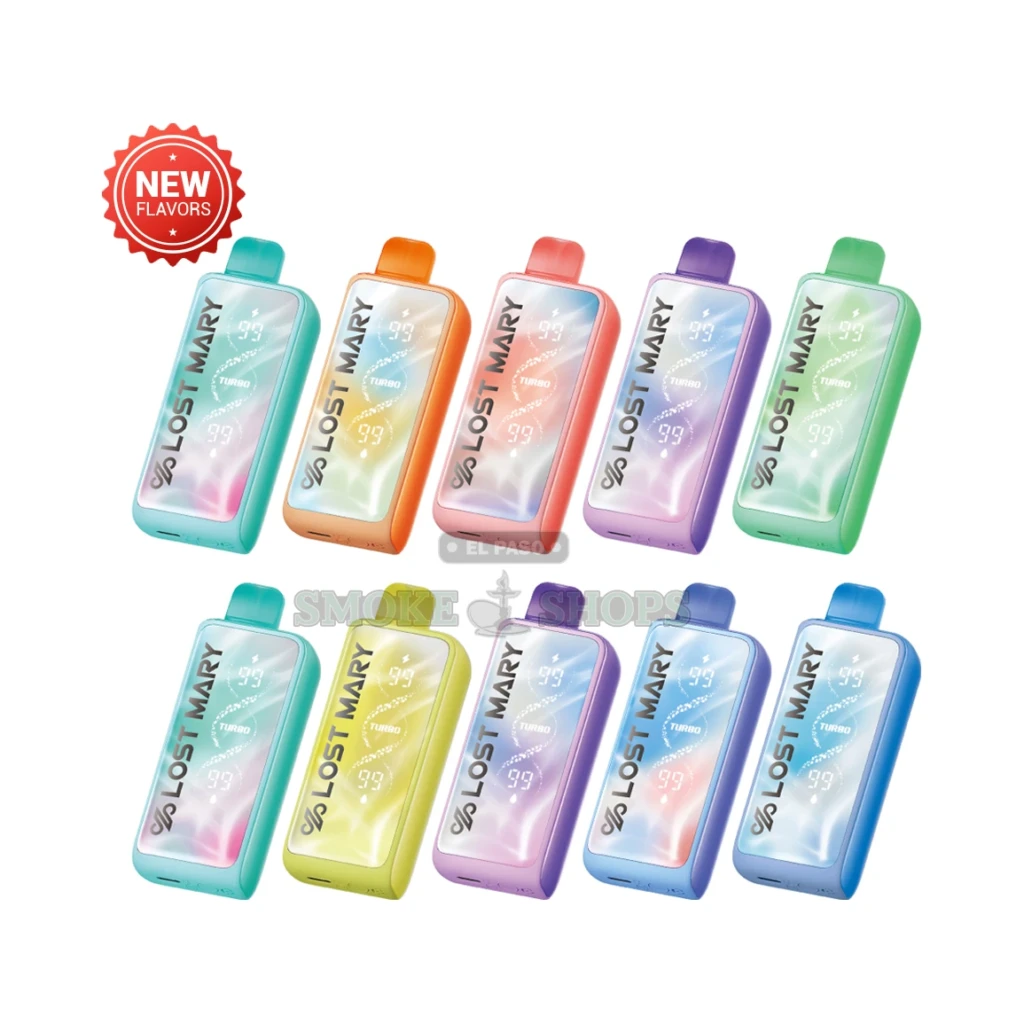
| Lost Mary MT35000 | US-market compliant | 18 mL | 5% / 50mg | 1000 mAh USB-C | $27.99 | ~$1.55/mL |
| Geak Nexx 40K | US-market compliant | 20 mL | 5% / 50mg | USB-C | $29.99 | ~$1.50/mL |
| Geek Bar Pulse 15K | US-market compliant | 16 mL | 5% / 50mg | 650 mAh USB-C | $29.99 | ~$1.87/mL |
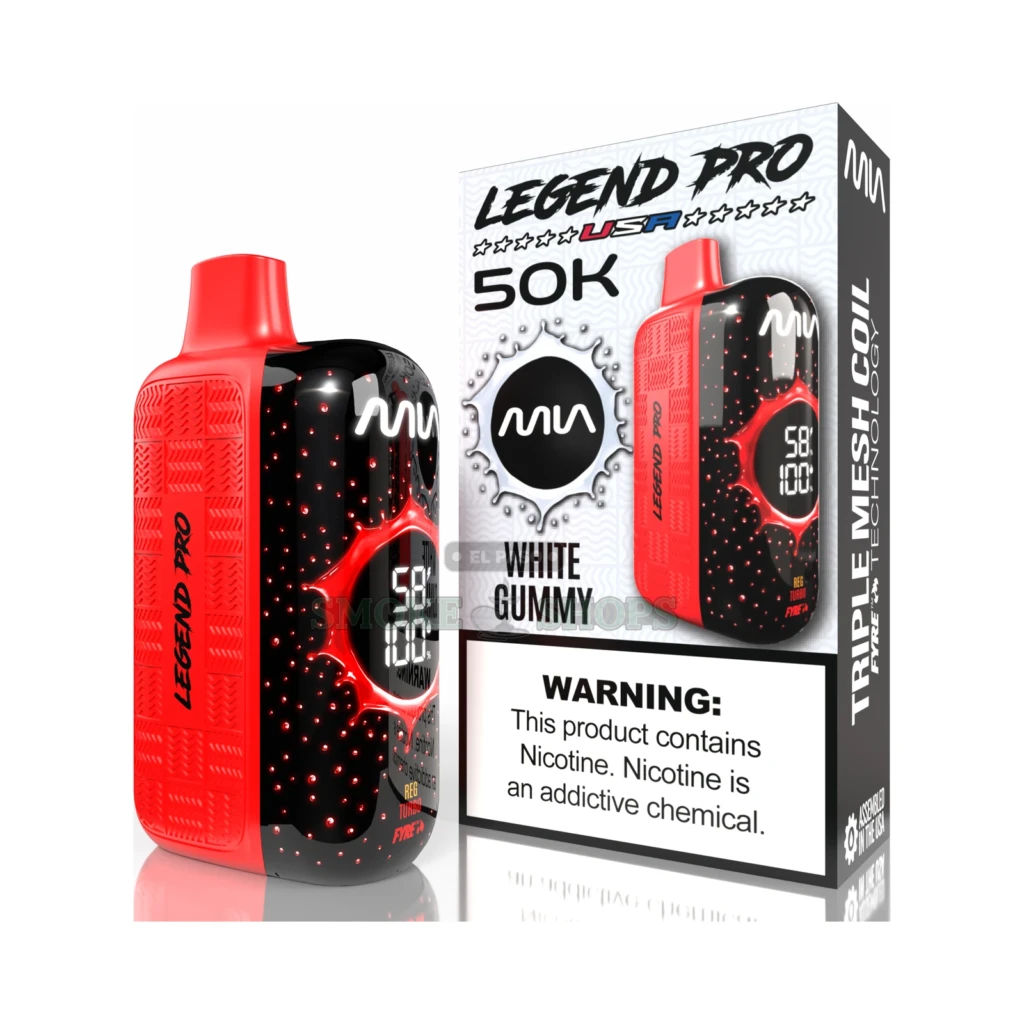
| Tyson Legend Pro 50K | US-filled | 25 mL | 5% / 50mg | 850 mAh USB-C | $33.99 | ~$1.36/mL |
| Geek Bar Pulse X 25K | US-market compliant | 18 mL | 5% / 50mg | 820 mAh USB-C | $39.99 | ~$2.22/mL |
- One Tank 40K. California-made and marketed as Texas Compliant. 22 mL, 5% (50 mg/mL), 850 mAh USB-C, a 2.8-inch screen, 10 to 30W adjustable wattage, separate ice control, and a real child-lock button, which is a genuine safety feature for households with kids. About $17.99, and at about $0.82 per mL it is the best value-per-mL big-puff device we carry.
- Oak 35K Texas Compliant (Ripe Vapes). Designed, assembled, and filled in the USA. 18 mL, 5% (50 mg/mL), 800 mAh USB-C, dual mesh coil, 3D curved screen. Ripe Vapes is the heritage US e-liquid house behind the award-winning VCT (Vanilla/Custard/Tobacco) blend that won Best Tobacco Flavor at Vape Summit 2014, which is the brand pedigree. Our live in-stock flavors for the Oak 35K are Blue Raspberry, Grape Ice, Guava Pineapple, Mango Oasis, Mint Ice, Strawberry Ice, Sour Apple, and Watermelon Ice. About $17.99 (roughly $1.00 per mL), 8 flavors in stock.
- Juice Head 5K USA Compliant. Made in the USA by Streamline Group in an ISO7 Huntington Beach, California facility, with US-sourced ZTN (tobacco-free synthetic) nicotine. 14 mL, 5% (50 mg/mL), 650 mAh USB-C rechargeable, mesh coil, fruit-forward flavors (current in-store lineup varies, about 8 on the shelf). This is the cleanest “why it is legal in El Paso under SB 2024” anchor: US-manufactured device, US-sourced e-liquid. About $21.99 (roughly $1.57 per mL).
- Juice Head 30K and 50K USA Compliant. US-filled (California) e-liquid. The 30K (24 mL) is a mode-dependent device (roughly 30K in Eco, 20K in Normal, 10K in Max), which makes it the perfect illustration of the honest puff math above: the headline number is the lowest-power ceiling, and real puffs land lower the harder you draw. The 50K (18 mL) is the Flex Freeze model with 5-level ice and 4-level nicotine-feel adjustment, a 5% (50 mg/mL) nicotine device. About $21.99 (30K, roughly $0.92 per mL) and $24.99 (50K, roughly $1.39 per mL).
- Fogest XP 40K. A pod-on-reusable-battery system. Ask a Host whether the SKU you are buying is the full kit or a pod refill, so you do not walk out with a pod and nothing to fire it. 20 mL, 5%, USB-C. About $23.99 (roughly $1.20 per mL).
- Reignbar Palette 50K. A dual-body magnetic snap design that lets you switch flavors in one device. 30 mL total, 5% (50 mg/mL), USB-C rechargeable. US-made and Texas SB 2024 compliant, a confirmed compliant pick. About $27.99, and at roughly $0.93 per mL it is one of the better big-tank values we carry.
- Tyson 2.0 Legend 30K. Marketed as filled in the USA and Texas compliant. 16 mL, 5% (50 mg/mL), 850 mAh USB-C, triple mesh coil, with Regular and Turbo modes. We frame the “USA” strictly as US-filled and SB 2024 compliance, not as a verified end-to-end made-in-USA device. About $27.99 (roughly $1.75 per mL), 18 flavors live.
- Lost Mary MT35000. 18 mL, 5%, 1000 mAh USB-C, dual mesh, a blend-in dual-percentage screen, and Smooth 35K / Turbo 20K modes. About $27.99 (roughly $1.55 per mL), 30 flavors live.
- Geak Nexx 40K. A slide-touch device with adjustable ice and adjustable nicotine feel (note the brand is “Geak,” not “Geek”). 20 mL, 5%, USB-C rechargeable. About $29.99 (roughly $1.50 per mL).
- Geek Bar Pulse 15K. 16 mL, 5% (50 mg/mL), 650 mAh USB-C rechargeable, dual mesh coil, with the first-of-its-kind full screen showing both battery and e-liquid level. Two modes: Regular (15,000 puffs) and Pulse (7,500 puffs, denser vapor and stronger flavor). Note the USA in the name is US-market and packaging compliance, not a claim the device is manufactured in the USA. About $29.99 (roughly $1.87 per mL), 25 flavors currently stocked.
- Tyson Legend Pro 50K. The bigger Tyson: 25 mL, 5%, 850 mAh USB-C, triple mesh “FYRE” coil, three modes (Regular / Turbo / Fyre). Same US-filled, SB 2024-compliant framing. About $33.99 (roughly $1.36 per mL).
- Geek Bar Pulse X 25K. The step-up: 18 mL, 5%, 820 mAh USB-C (about 80% charge in roughly 20 minutes), dual mesh, 3D curved screen. Regular 25,000 puffs / Pulse 15,000. Heads-up that its animated light show fires on every puff and cannot be turned off. About $39.99, which at roughly $2.22 per mL is the priciest per mL on our shelf. 12 flavors live.
Flavors and exact in-stock specs vary by store and by production run, so the surest move is to ask a Host or check current stock at your nearest location. The prices above are what we charge in store; the live per-store price and stock for each device are on its product page. Browse the full lineup in our Disposable Vapes category.
 MT35000Disposable Vape · El PasoView in El Paso
What is the best legal disposable vape in El Paso?
The “best” disposable is the cheapest compliant one that fits how you actually use it: a small 5K for light or occasional use, a rechargeable 30K to 50K big-tank for daily use (cheaper per mL), an adjustable device if you want to tune ice and nicotine feel, or a zero-nicotine aromatherapy option if you only want the ritual. All of the disposables are nicotine devices that are US-made or US-filled and free of banned substances, in the compliant lane SB 2024 allows.
- Light or occasional? A 5K like the Juice Head 5K is plenty and the cheapest entry (about $21.99).
- Daily user who wants it to last? A rechargeable big-tank works out to less per mL. Our best values per mL are the One Tank 40K (about $17.99, roughly $0.82 per mL), the Juice Head 30K (about $21.99, roughly $0.92 per mL), and the Reignbar Palette 50K (about $27.99, roughly $0.93 per mL). Compare on price per mL, not per advertised puff, per the sanity-check box above.
- Want to tune flavor or cooling on the fly? The Geak Nexx slide control (about $29.99) or the Juice Head 50K adjustable ice (about $24.99).
- Want to switch flavors in one device? The Reignbar Palette snap design (about $27.99).
- Want zero nicotine for the ritual only? Our zero-nicotine products are aromatherapy items, not vapes: Ripple+ (about $17.99) or Vapeless Bamboo (about $11.99) (below).
Which devices or flavors are on the shelf differs by store, and the live per-store price and stock check on each product page is the source of truth. That same-day, in-store reality is our actual differentiator over mail order, and it is already a live feature you can use before you drive over.
Are zero-nicotine options real, and do they help with the habit?
Yes, genuinely nicotine-free products exist, and they can occupy the hand-to-mouth ritual without delivering nicotine, but they are not a quit aid and we will not present them as one. A heads-up on what “zero nicotine” means at our stores: we do not sell 0mg versions of the nicotine disposables (there is no 0mg Geek Bar Pulse 15K, no 0mg Reignbar Palette 50K, no 0mg Juice Head on our shelf). Some brands do make 0mg versions of their devices, but our only nicotine-free products are the two aromatherapy items below, which are not vapes:
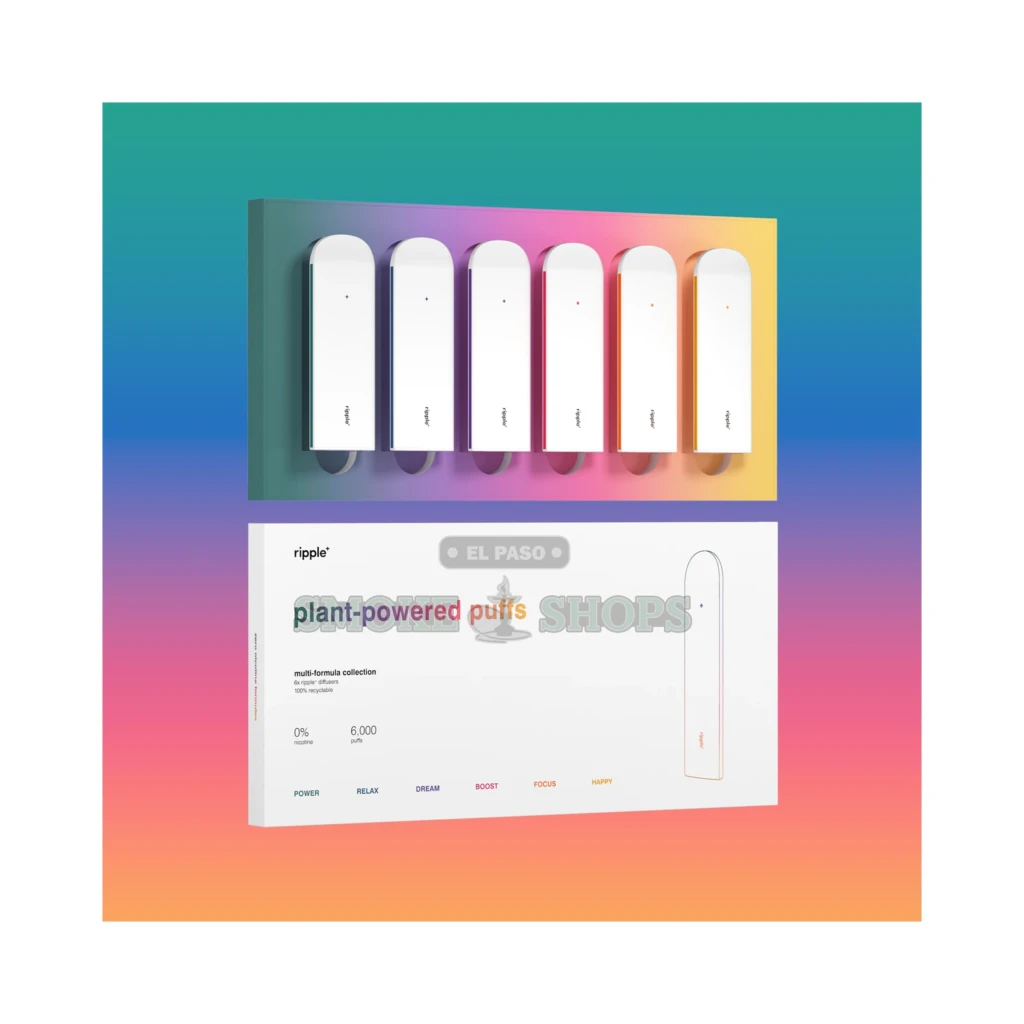
- Ripple+ Zero Nicotine Aromatherapy. A zero-nicotine, zero-tobacco aromatherapy diffuser that heats plant-based botanical blends, organized by mood (Relax, Dream, Power, Focus). It contains no nicotine and is not a vape in the regulatory sense. Inhaling any heated substance is not risk-free, so we describe it factually as a nicotine-free aromatic ritual product, not a health product. About $17.99.
- Vapeless Aromatherapy Bamboo 5-pack. A battery-free, non-electronic flavored-air stick (no battery, no coil, no e-liquid, nothing vaporized or burned). You simply draw air through a bamboo stick infused with flavor oils. Five flavors, about 2 to 5 days per stick, 100% nicotine-free. About $11.99.
These mimic the ritual cues of vaping without nicotine. They are not FDA-approved for cessation (no such product is), and we make no health or “healthier than vaping” claim about them.
 Zero Nicotine AromatherapyDisposable Vape · El PasoView in El Paso
What else can you replace vaping with?
The best replacements split into two jobs: handling the nicotine craving and handling the hand-to-mouth habit. For the chemical side, evidence-based NRT (patches, gum, lozenges) is the proven route, and it is free from the quitline. For the behavioral side, sugar-free gum, toothpicks, sunflower seeds, cold water, a quick walk, or breathing exercises occupy the same loop without nicotine.
- For nicotine cravings: NRT, plus a glass of cold water or a brisk five-minute walk to ride out a surge, which usually passes in a few minutes.
- For the hand-and-mouth habit: sugar-free gum or mints, toothpicks, crunchy snacks like carrots or sunflower seeds, a fidget object, or a stress ball.
- For stress, the usual real trigger: short breathing drills, a walk, exercise, or texting a friend instead of reaching for the device.
Is it true that no disposable vapes are FDA-authorized?
Almost, but not quite. The only FDA-authorized disposables are NJOY Daily and Daily Extra in tobacco and menthol; no flavored, high-puff disposable holds authorization. As of May 2026, roughly 45 e-cigarette (ENDS) products from five companies (Vuse, NJOY, Logic, JUUL, and Glas) have FDA marketing authorization through the PMTA pathway. No independent disposable brand (Elf Bar, Geek Bar, Lost Mary, and the rest) is authorized. On May 5, 2026, the FDA authorized its first fruit-flavored ENDS (Glas mango and blueberry pods), a notable policy shift, but those are pods, not the big flavored disposables most shops stock. So the accurate statement is: no flavored, high-puff disposable is FDA-authorized, and the only authorized disposable is NJOY Daily. Federal enforcement has escalated sharply, with CBP and FDA operations seizing over 18 million unauthorized devices worth more than $175 million in 2025 alone, plus civil penalties against retailers selling unauthorized products. “FDA-authorized” also does not mean “safe,” and no vape is FDA-approved as a way to quit.
For context that cuts against the youth-epidemic caricature: US adult smoking fell below 10% for the first time on record in 2024 (9.9%), and youth e-cigarette use dropped to 5.9% in 2024 from 11.3% in 2022, though about 1.6 million youth still reported use and most of them used flavored products, so the work is not finished. Vaping is a 21+ adult category, and that is how we treat it.
Whatever you decide, base it on facts, not marketing. Adults 21+ can browse the compliant lineup and pick up same-day at any of our 9 El Paso and Canutillo locations through our Disposable Vapes category, where our Hosts will give you the straight version. And if you are trying to stop, that is a separate, free path: start with the Texas Tobacco Quitline at 1-877-YES-QUIT or 1-800-QUIT-NOW. Every product we sell contains nicotine, which is addictive, or, in the case of our zero-nicotine aromatherapy items, is still a product you inhale; none of it is “safe,” and honesty is the whole point of this page.


