
No, there is no single nationwide law making all disposable vapes illegal in 2026. The reality is narrower: through the FDA’s Premarket Tobacco Product Application (PMTA) process, only 45 e-cigarette (ENDS) products from five companies are authorized for sale as of May 2026, and most disposables on the market were never authorized, so the FDA prioritizes enforcement against them. In Texas, SB 2024 (effective September 1, 2025) bans disposables made in China and other foreign-adversary countries, cannabinoid vapes, and minor-appealing devices, while US-built and other compliant disposables stay legal for adult retail sale. Buyers are not the target; sale and import are. You must be 21 or older to buy, and every nicotine vape contains nicotine, which is addictive. Vaping is not “safe.”
- Are disposable vapes getting banned in the USA?
- Can I still use my disposable vape after a ban?
- Which disposable vapes will still be legal?
- What does “Texas-compliant” or “USA Compliant” mean?
- What disposables does EPSS carry that are legal in Texas?
- What are the rules for buying and selling in the US?
- Are disposable vapes legal in all US states?
- What is Texas SB 2024 and how does it affect disposable vapes?
- Does a Texas vape shop need a special permit, and is there a tax?
- Can I vape indoors in El Paso?
- How old do you have to be to buy a vape in Texas?
- What does the science actually say, and what about EVALI?
- 45 ENDS products are FDA-authorized, from five companies: Vuse, NJOY, Logic, JUUL, and Glas.
- The only FDA-authorized disposables are NJOY Daily and Daily Extra (Rich Tobacco and menthol only).
- May 5, 2026: the FDA authorized its first flavored ENDS ever (four Glas pods, including mango and blueberry).
- Texas SB 2024: effective Sept 1, 2025; selling a banned product is a Class A misdemeanor (up to 1 year jail and a $4,000 fine).
- 21+ to buy, possess, or use, with ID checked at the counter.
Are disposable vapes getting banned in the USA?
No, disposable vapes are not banned nationwide in 2026. There is no federal law making the category illegal. Instead, the FDA requires every e-cigarette to win authorization through a Premarket Tobacco Product Application (PMTA); most disposables never did, so enforcement targets unauthorized sale and import, not personal possession.
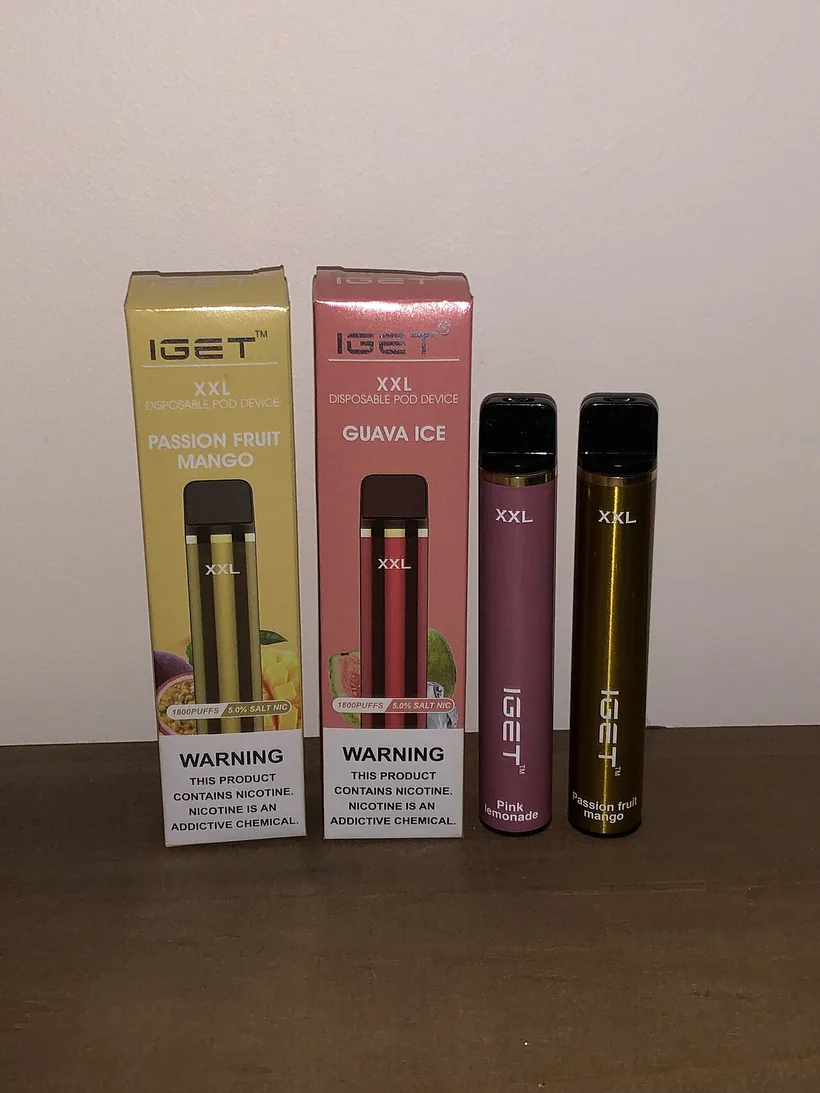
This distinction matters more than the headlines suggest. “Unauthorized for sale” is not the same as “banned to possess,” and a product that is restricted in one state may sit legally on a shelf in another. Think of it as enforcement allocation, not legalization or a clean ban: the FDA focuses its limited resources on the highest-risk products first while leaving room to act against anything it chooses. That is why the market keeps shifting brand by brand instead of disappearing all at once. The result in 2026 is a patchwork, not a switch that flips off the whole category overnight, and Congress has not passed a single nationwide “disposable vape ban.”
What the FDA actually controls
- The PMTA gate: a manufacturer must prove a product is “appropriate for the protection of public health” before it can be marketed.
- Marketing Granted Orders (MGOs): the green light. As of May 2026, 45 ENDS products hold one, and they come from only five companies: Vuse, NJOY, Logic, JUUL, and Glas. (Nicotine pouches like ZYN and ON! are a separate product class with their own authorizations and are not counted here.)
- Marketing Denial Orders (MDOs) and import alerts: the FDA can deny applications and block shipments at the border, which it has done aggressively against overseas disposable makers.
One important caveat the FDA states itself: a Marketing Granted Order means a product is authorized to be sold. It does not mean the product is safe or “FDA-approved.” The FDA is explicit that all tobacco products are harmful and addictive, including the authorized ones.
The freshest news: the FDA just loosened on flavors
Recent, dated developments show the trajectory is not one-directional:
- May 5, 2026: the FDA authorized four Glas pods, including a Gold (mango) and Sapphire (blueberry) at 5% nicotine. These were the first non-tobacco, non-menthol flavored ENDS ever authorized in the US, a real policy reversal. The Glas devices use Bluetooth age-and-ID verification that disables the device if it is separated from the registered owner’s phone. The shift followed President Trump publicly pressing FDA Commissioner Marty Makary to move faster on flavored vapes. The authorized count itself drifted from 39 in February 2026 to 45 by May 2026.
- July 17, 2025: the FDA issued MGOs to JUUL Labs for five products (the JUUL device plus Virginia Tobacco and Menthol pods at 3% and 5%), reversing its earlier denial and citing a two-year cohort study showing adult smokers switching completely.
- March 9, 2026: the FDA released draft guidance opening a possible PMTA path for mint, coffee, tea, and spice flavors. Fruit, candy, and dessert flavors still carry the highest evidentiary bar.
How a disposable’s legal footing is judged
| Status | What it covers | Enforcement risk |
|---|---|---|
| Authorized (MGO) | Products with an FDA Marketing Granted Order | Lowest; fully authorized to sell |
| Under review | PMTAs filed and accepted, still under FDA scientific review | Moderate; minor-appealing packaging or other red flags can still trigger action |
| Unauthorized or denied | No PMTA on file, or a Marketing Denial Order issued | Highest; this covers most unauthorized disposables seized at the border and in stores |
The takeaway: a product’s legal footing depends on its application status, not on whether it is “disposable” as a shape. A disposable with a granted order is safer ground than a refillable device with no application at all.
Federal enforcement is real, and the numbers are large
If you wonder why familiar brands keep vanishing from shelves, the enforcement side explains it:
- Operation Red Mist (Customs and Border Protection, the US Coast Guard, and the FDA) seized more than 18 million vaping devices worth over $175 million, targeting misclassified maritime cargo from China.
- A September 10, 2025 seizure of $86.5 million in illegal vapes was the largest ever.
- A July 2024 FDA and CBP operation seized about 3 million devices ($76 million), naming Geek Bar, Lost Mary, and Bang.
- Congress directed roughly $200 million to illegal-vape enforcement in FY2026.
- Retailer civil penalties now exceed $21,000 per violation, and the FDA and CBP have explicit seize-and-destroy authority at ports of entry.
Can I still use my disposable vape after a ban?
Yes. You can legally keep using a disposable vape you already own. Both federal rules and Texas SB 2024 target sellers, importers, and manufacturers, not adult owners. Personal possession is not criminalized for adults 21 and up. The only thing that changes is availability, since unauthorized models get pulled from shelves over time. (Separately, under-21 possession remains illegal under Tobacco 21.)
What changes for you is availability, not legality of use. As unauthorized models get pulled from import and retail, your favorite SKU may simply stop showing up on shelves. That is an availability problem, and it is why many adult Guests shift toward products that have a clearer compliance path so restock is predictable.
Possession being legal does not make vaping “safe.” Every nicotine vape delivers nicotine, which is addictive, and vaping is not risk-free. See the science section below for where the contested “95% less harmful” figure comes from. Nothing here is medical or legal advice.
Which disposable vapes will still be legal?
As of 2026, the only FDA-authorized disposable is the NJOY Daily and NJOY Daily Extra (Rich Tobacco at 4.5% and 6%, and menthol only). Everything else, including Geek Bar, Elf Bar, and Lost Mary, lacks a marketing order. In Texas, a disposable must also avoid the SB 2024 banned-origin list to be sold legally, so the two questions below decide a device’s status.
Beyond that short authorized list, “legal to sell” in any given store depends heavily on state law layered on top of federal status. A device can be unauthorized federally yet still sit in an enforcement gray zone, while a state like Texas may separately bar it based on where it was made.
The two questions that decide a disposable’s status
- Does it have FDA authorization? If yes, it is the cleanest option nationwide. Among disposables, only NJOY Daily currently qualifies.
- Where was it manufactured or filled? In Texas, this is decisive: Chinese-made and certain foreign-adversary-country disposables are banned from sale regardless of brand popularity.
Is my brand legal? A quick status table
| Brand or device | FDA status | Texas SB 2024 status | Can EPSS sell it? |
|---|---|---|---|
| NJOY Daily / Daily Extra | Authorized (MGO) | Origin-compliant | Yes |
| Most China-manufactured imported disposables | Unauthorized, many seized | Banned (foreign-adversary origin) | No |
| US-filled lines (Juice Head, Tyson 2.0, Oak 35K, One Tank) | Unauthorized federally | Origin-compliant, legal to sell | Yes |
| Any cannabinoid vape (THC, Delta-8, and similar) | Not an ENDS pathway | Banned outright | No |
At our El Paso and Canutillo stores, our Hosts stock toward products that fit Texas rules so adult Guests can rely on same-day in-store pickup without guessing whether a SKU is about to vanish. You can browse the current selection under Disposable Vapes.
What does “Texas-compliant” or “USA Compliant” actually mean on a disposable?
It is a sourcing and compliance label, not a health or quality claim. Texas SB 2024 keys on where the device or its e-liquid is manufactured and filled. Many of the disposables that stay legal in Texas use US-filled e-liquid and are built to meet SB 2024, even when some hardware components are still made overseas. So “USA Compliant” or “Texas Compliant” on a box means the product is positioned to meet the state’s origin rules, not that the entire device was manufactured end-to-end in America, and not that it is safer than anything else.
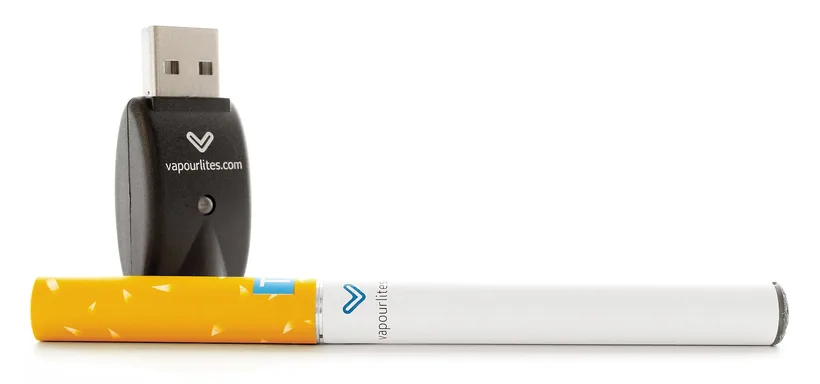
One honest caveat about names: when “USA” appears inside a product’s name (for example on some Geek Bar SKUs, or on a device named “Tyson 2.0 Legend 30K USA”), that is US-market and packaging language. Geek Bar is a China-origin brand named in federal seizures, so we treat any “USA” in a product name strictly as compliance and market wording, never as a “made in USA” manufacturing claim.
What disposables does EPSS carry that are legal in Texas?
Here is a snapshot of the US-filled and SB 2024-positioned nicotine disposables our Hosts stock, with our actual current shelf prices. All are 5% (50 mg/mL) salt nicotine, USB-C rechargeable, and 21+ only. Every “USA” or “USA Compliant” in the device names below is origin and market wording, not a made-in-USA manufacturing claim. Puff numbers are manufacturer ratings (more on that just after the table). The live price on each product page is the source of truth and can change, but these are what they ring up at today.
| Device | E-liquid | Rated puffs | Our price | Cost per puff | Price per mL |
|---|---|---|---|---|---|
| Oak 35K (Ripe Vapes) | 18 mL | 35,000 | $17.99 | 0.051 cents | $1.00 |
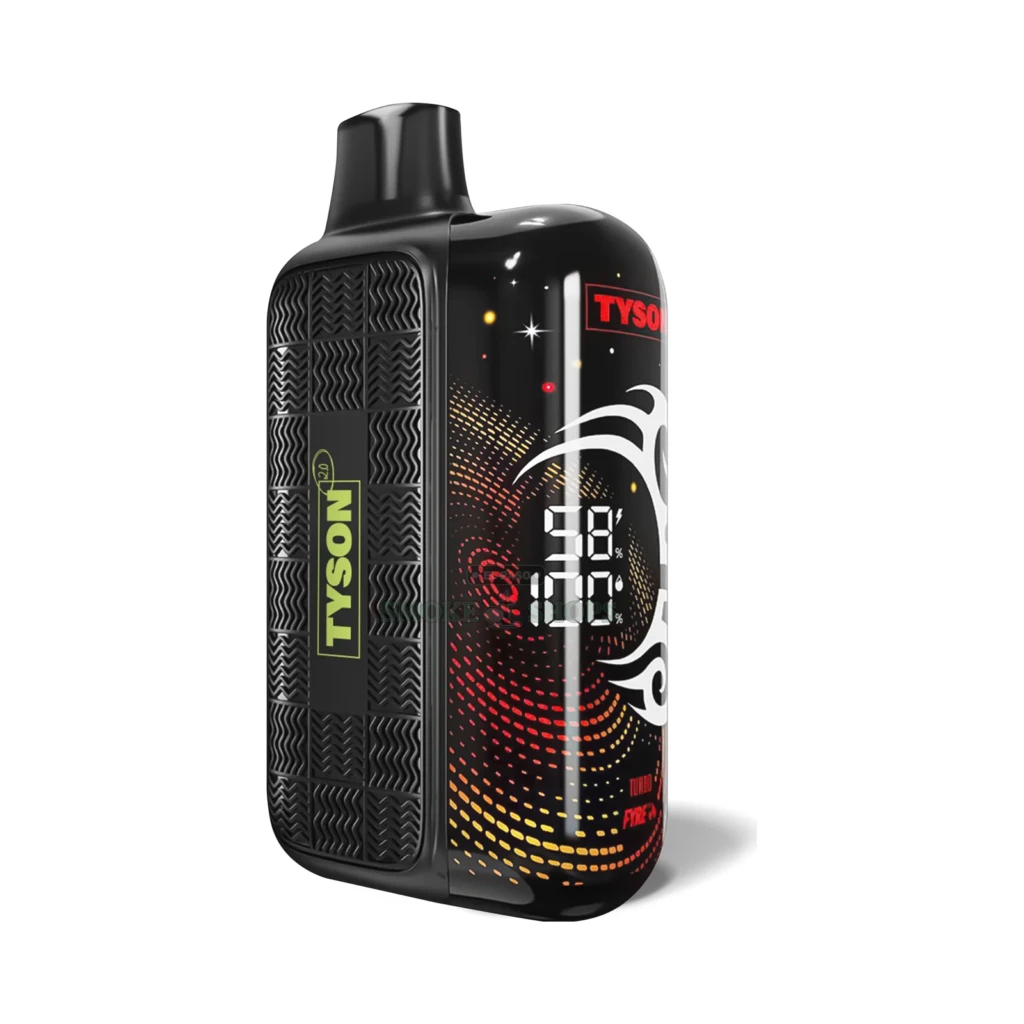
| Tyson Legend 30K USA | 16 mL | 30,000 | $27.99 | 0.093 cents | $1.75 |
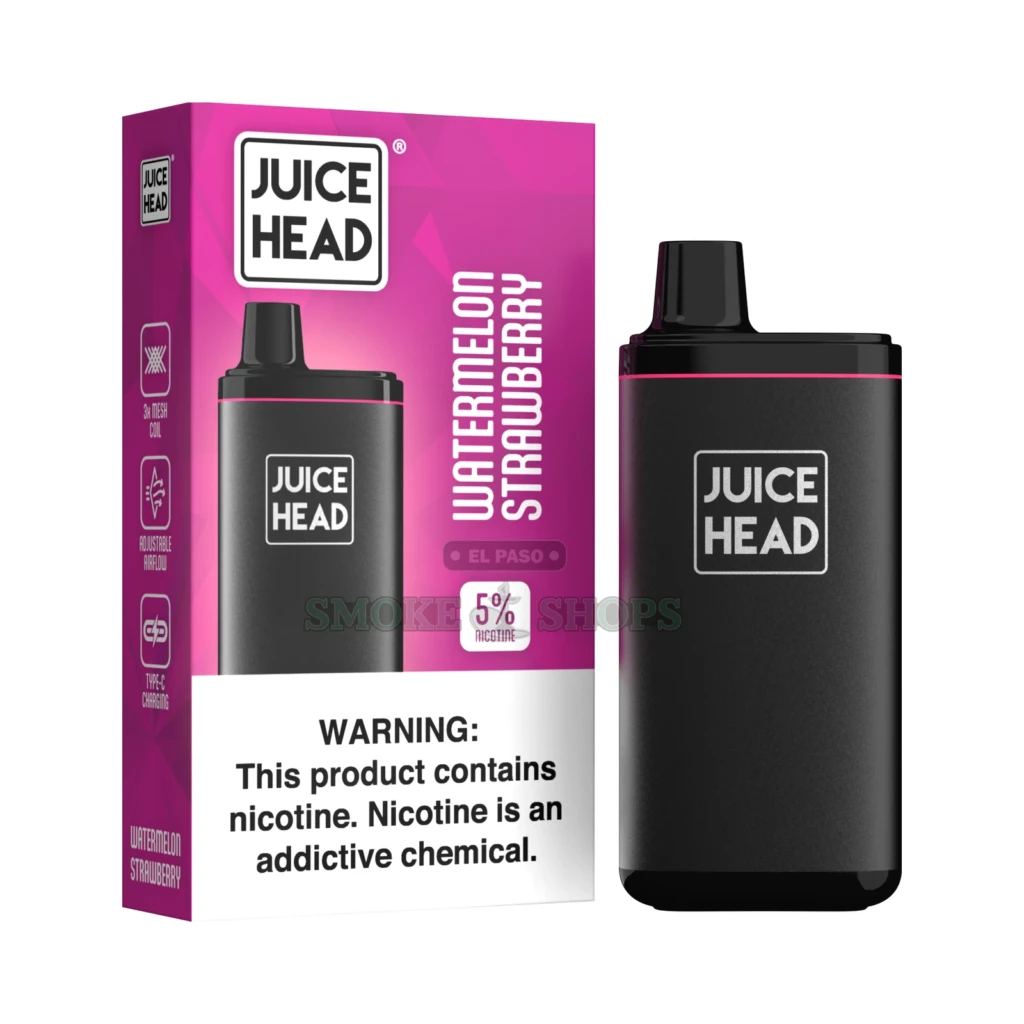
| Juicehead 5K USA Compliant | 14 mL | 5,000 | $21.99 | 0.44 cents | $1.57 |
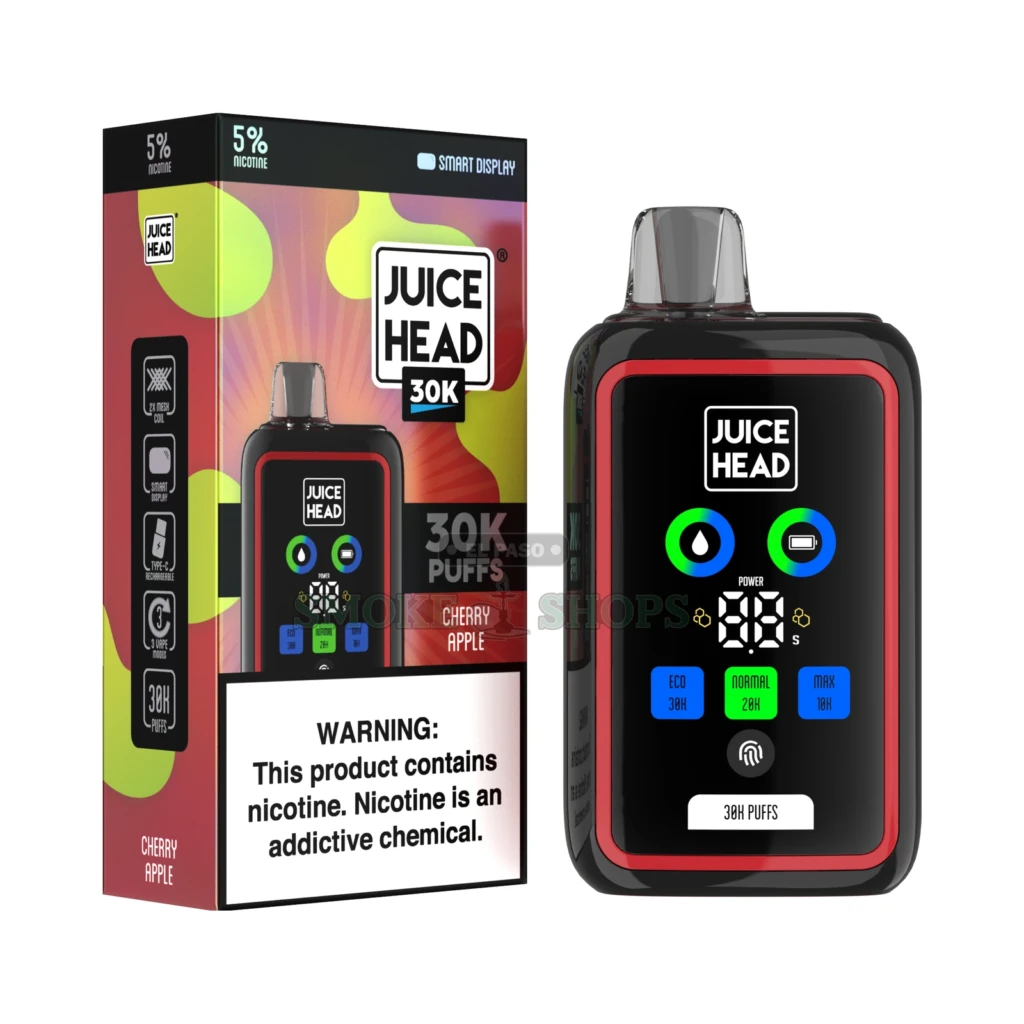
| Juicehead 30K USA Compliant | 24 mL | 30,000 | $21.99 | 0.073 cents | $0.92 |
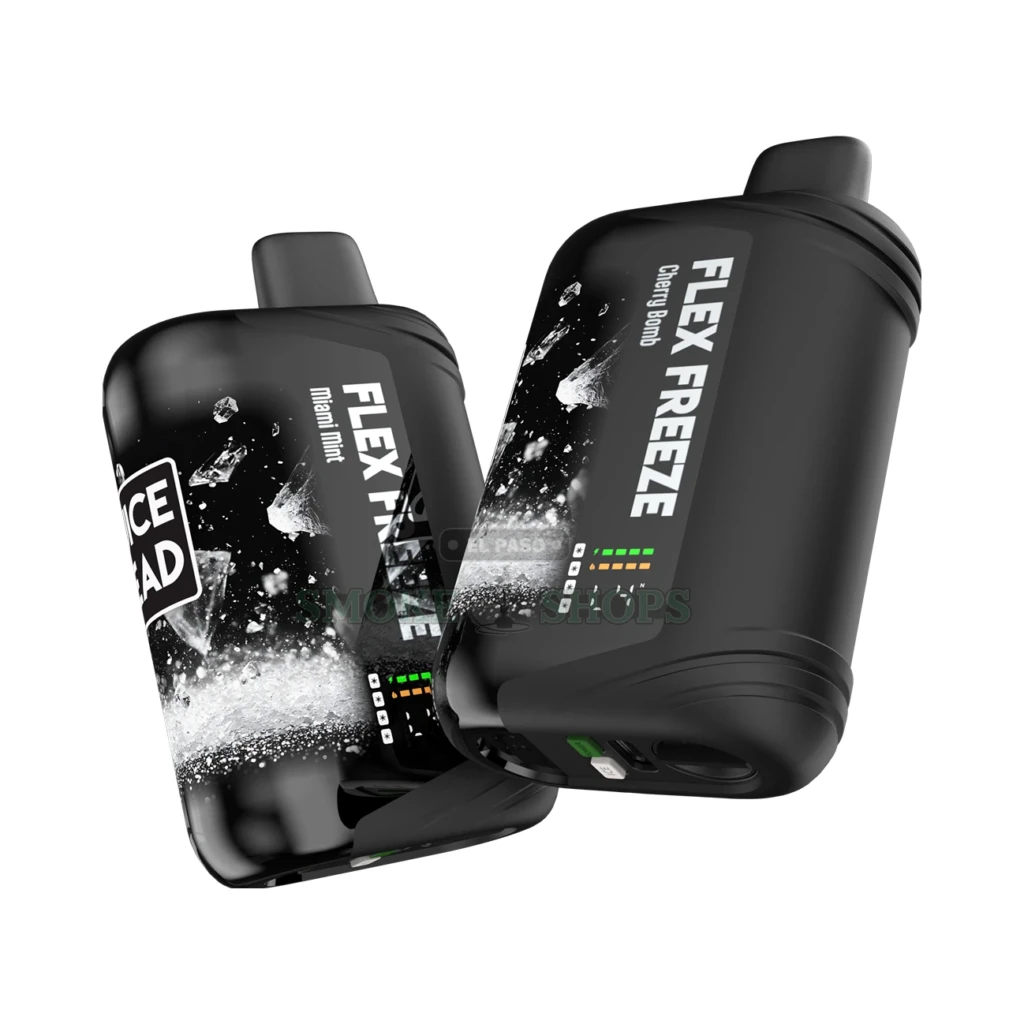
| Juicehead 50K USA Compliant (Flex Freeze) | 18 mL | 50,000 | $24.99 | 0.05 cents | $1.39 |
| One Tank 40K | 22 mL | 40,000 | $17.99 | 0.045 cents | $0.82 |
The cost-per-puff column is just our price divided by the rated puff count, and the price-per-mL is our price divided by the e-liquid capacity, so you can compare devices honestly. The high-puff units are the cheapest per puff by a wide margin: the One Tank 40K works out to about 0.045 cents per puff and the Juicehead 50K about 0.05 cents per puff, while the small 5,000-puff Juice Head 5K runs about 0.44 cents per puff because you are paying for far fewer puffs. Per-store pricing is confirmed at the counter and the live Disposable Vapes page shows the current price and what each location has in stock right now. All are stocked for same-day in-store pickup across our 9 El Paso and Canutillo stores, 21+ with ID. Our zero-nic aromatherapy sticks are a separate class, covered further down.
A cigarette is roughly 12 puffs, so a 20-pack is about 240 puffs. At our real pack prices, a $9.23 pack of Marlboro works out to about 3.8 cents per puff and our average pack of about $7.34 to roughly 3.1 cents per puff. Compare that to our disposables, which run from about 0.045 cents per puff (One Tank 40K at $17.99) up to about 0.44 cents per puff (Juice Head 5K). On rated puffs alone, a 35,000-puff device like the Oak 35K is the puff-equivalent of about 146 packs. This is a cost-per-puff comparison only; it says nothing about safety, and every nicotine product here, cigarette or vape, contains nicotine, which is addictive.
A few notes our Hosts will confirm in person:
- The Oak 35K by Ripe Vapes is built around the brand’s award-winning VCT flavor (Vanilla, Custard, Tobacco), which took Best Tobacco Flavor at Vape Summit in 2014. If you want a real tobacco-dessert flavor rather than fruit, this is the one. At $17.99 with 18 mL it is one of our best values on cost per puff. Its e-liquid is US-filled, which is the SB 2024 hook.
- The Tyson 2.0 Legend 30K USA ($27.99) uses a triple mesh coil and a curved LCD; the USA version is US-filled e-liquid, which is the SB 2024 hook.
- The Juicehead 5K ($21.99) is our cleanest US-manufacturing example: it is made by Streamline Group in an ISO7 facility in Huntington Beach, California, using tobacco-free ZTN synthetic nicotine. Juice Head is a US e-liquid brand with more than ten years of operation. At 5,000 puffs it costs the most per puff of our lineup, so it suits light or occasional use rather than all-day vaping.
- The Juicehead 30K ($21.99) is really three devices in one: Eco mode stretches to about 30,000 puffs, Normal about 20,000, and Max about 10,000 with the biggest clouds. The smart screen shows which mode you are in. It uses US-sourced e-liquid filled in California, and at 24 mL it is our lowest price per mL.
- The Juicehead 50K ($24.99) is the 5% nicotine Flex Freeze 50K (not the zero-nic iFLEX variant), with 5-level ice, 4-level adjustable nicotine, triple mesh, and a 3D screen. At a 50,000 rated puff count it is among our lowest cost per puff.
- The One Tank 40K ($17.99) leads on control and on value: an adjustable 10-30W output, separate ice level, child-lock, and a 2.8-inch screen with a hit timer, and at about 0.045 cents per puff it is the cheapest per puff we carry. We frame its “Made in USA / Texas Compliant” positioning as compliance language verifiable on the packaging.
Light user or pocket carry? The Juice Head 5K ($21.99, 14 mL) is the right size, though it is our priciest per puff. Heavy daily user? A high-puff device like the One Tank 40K ($17.99), Juicehead 50K ($24.99), or Juicehead 30K ($21.99) costs about the same up front but far less per puff, down to roughly 0.045 to 0.073 cents. Want the most control? The One Tank 40K‘s adjustable 10-30W output plus ice level, or the Juicehead 50K‘s 4-level nicotine and 5-level ice, let you dial the hit. Not sure on flavor or strength? Ask a Host and we will point you to the right fit.
All our nicotine disposables are USB-C rechargeable. Most ship without a charging cable, so bring a standard USB-C cord. The Juice Head 5K is the usual exception that includes one.
Treat them as rated maximums, not guarantees. Manufacturers measure puff counts on short lab draws in the lowest-power mode, so real-world counts run lower. On our devices, the One Tank 40K, Juicehead 30K/50K, and similar high-puff units all hit their top number only in the lowest-power / Eco / Smooth mode. Switch to Turbo, Pulse, Max, or Fyre and you roughly halve it for a stronger, warmer hit that drains faster, which also roughly doubles your real cost per puff above the rated figure. The verifiable spec is the e-liquid capacity in milliliters; a rough sanity check is roughly 200 to 300 honest puffs per milliliter of liquid.
Most of our smart-screen disposables show battery percent and e-liquid percent when you puff. Regular / Eco / Smooth mode gives the max puff count and a lighter hit; Turbo / Pulse / Max / Fyre gives a stronger, warmer hit that drains faster. The One Tank 40K adds plus and minus wattage buttons, a flame button for ice level, and a child-lock. Our Hosts will walk you through the controls in store.
A quick word on nicotine strength and salt vs freebase
Here is the device chemistry, framed strictly as how the hardware works. Percent times 10 equals mg/mL, so 5% equals 50 mg/mL. Salt nicotine (protonated, with benzoic acid lowering the pH to about 5 to 6) feels far smoother than freebase nicotine (high pH, about 8 to 9) at the same strength, which is why disposables use high-strength salt. A human crossover study found salt delivered more nicotine to the blood than freebase at equal concentration, with the leading explanation being that a smoother aerosol lets users inhale more deeply. None of this makes any device safer; it explains why the strength feels the way it does.
Lithium-battery safety and disposal
Every one of these is a sealed lithium-battery device, so a little care matters:
- Charging (per FDA guidance): use only the original charger or a standard USB-C cord, never a phone or tablet wall brick rated higher, and never charge overnight or unattended. Keep loose or spare batteries away from coins and keys, and replace any unit that is damaged, swollen, or wet.
- Disposal (general guidance): a dead disposable is hazardous waste because it combines a lithium cell with residual liquid nicotine. Do not put it in household trash or curbside recycling; the lithium cell can ignite and the leftover nicotine is toxic. Take the device intact, without disassembling it, to a household-hazardous-waste (HHW) site or a certified battery / e-waste drop-off. National programs such as Call2Recycle and Batteries Plus accept these batteries, so search either one for a location near you. We do not run an in-store take-back and cannot point you to a specific El Paso drop-off, so use a national program or your local HHW facility’s published locations.
Do you sell any zero-nicotine options?
Yes, and they sit in a different legal class entirely. The only zero-nicotine products we carry are aromatherapy diffusers, not vapes. Ripple+ and Vapeless aromatherapy products contain zero nicotine, zero tobacco, and zero cannabinoids, so they fall outside the federal ENDS and tobacco-product definition and outside the SB 2024 nicotine-disposable rules. To be clear, we do not stock a 0mg version of any nicotine device on our shelves. Some brands do make 0mg versions of their nicotine disposables, but that is general market context, not something we carry; if you want zero nicotine from us, it is the aromatherapy products below.
- The Ripple+ aromatherapy diffuser heats plant-based botanical blends; exact mL and battery specs are not published by the brand, so we mark those “Not specified” rather than invent them. Current shelf price is shown on its product page. We sell it strictly as an aromatic ritual product.
- The Vapeless bamboo 5-pack is battery-free and contains no nicotine and no e-liquid. There is nothing to charge and no puff rating; each stick lasts about two to five days. Current shelf price is on its product page. We describe it factually as nicotine-free aromatherapy and do not repeat any “healthier alternative” marketing.
Because these are nicotine-free, they do not carry the nicotine warning that our nicotine devices do. We sell them as nicotine-free aromatic rituals, not as quit aids. They are not approved by the FDA as cessation aids, and inhaling any substance is never risk-free.
What are the rules for buying and selling disposable vapes in the US?
For sellers, the rules are heavy: a product needs FDA authorization (or at least an accepted, under-review PMTA) to be marketed, it cannot be imported in violation of an FDA import alert, and it must comply with every applicable state law on top of that. For buyers, the core rule is simpler: you must be 21 or older, and retailers must check ID (the buying-age details are in their own section below).
Seller-side rules in plain English
- Authorization: only FDA-authorized products are unambiguously legal to market; unauthorized ones carry enforcement risk.
- Imports: the FDA has issued import alerts against major overseas disposable makers, letting Customs detain shipments at the border without physical exam.
- State law: a growing number of states layer on their own product-list or origin rules that further limit what can be sold locally.
- Marketing limits: no youth-appealing designs, packaging, or claims.
- Age and ID: 21+ only, with ID verification at the point of sale.
Are disposable vapes legal in all US states?
No. Disposable vapes are not legal in every US state. A federal 21+ floor and the FDA PMTA framework apply everywhere, but states add their own rules. Some maintain product-list laws allowing only authorized products, and Texas restricts vapes by country of manufacture under SB 2024. The same device can be sold in one state and barred in another.
At the federal level, the FDA’s import alert “Red List” system lets Customs detain and refuse shipments from listed brands without inspection. The upshot is that the exact same disposable can be openly sold in one state, restricted in another, and effectively unavailable in a third. There is no single map you can memorize; the rules move, and they move at the state level.
What is Texas SB 2024 and how does it affect disposable vapes?
Texas SB 2024 was signed June 20, 2025 and took effect September 1, 2025. It is the state law that reshaped which vapes can be sold in Texas. It makes it a Class A misdemeanor (up to one year in jail and a $4,000 fine per offense) to market, advertise, offer for sale, or sell certain prohibited e-cigarette products. SB 2024 has three real teeth:
- Banned origins: e-cigarettes wholly or partially manufactured in, or marketed as made in, China or any country designated a “foreign adversary” by the US Secretary of Commerce. That list currently includes China, Cuba, Iran, North Korea, Russia, and Venezuela’s Maduro regime (Russia was added April 1, 2026; verify the current designation at any time, since SB 2024 incorporates it by reference and it can change). This removed most China-manufactured imported disposables from the legal Texas market.
- Banned substances: any cannabinoid (THC, Delta-8, Delta-10, HHC, CBD, and derivatives), plus alcohol, kratom, kava, mushrooms, and tianeptine.
- Banned designs: minor-appealing packaging (cartoons, candy or food imagery, celebrities) and devices disguised as pens, highlighters, phones, school supplies, or toys.
Crucially, SB 2024 did not outlaw the disposable category and it did not ban flavors. Disposables built outside the banned-origin list, refillable devices, and US-made e-liquids all remain legal to sell to adults 21 and up. The legal exposure falls on the shop and distributor, not on the adult Guest.
What SB 2024 bans vs. what stays legal in Texas
| Banned for retail sale in TX | Still legal for adults 21+ |
|---|---|
| Disposables made in (or marketed as made in) China or another foreign-adversary country | Disposables built or US-filled outside the banned-origin list |
| Any cannabinoid vape (THC, Delta-8, Delta-10, HHC, CBD, and similar), plus kratom, kava, mushrooms, tianeptine, and alcohol products | Nicotine and zero-nicotine e-liquids and devices that meet the rules |
| Devices disguised as pens, highlighters, toys, phones, or school supplies | Standard refillable pod and mod systems |
| Packaging using cartoons, candy imagery, or youth-targeted branding | US-made bottled e-liquids in all flavors (Texas has no flavor ban) |
One hard line worth repeating for Texas: cannabinoid vapes are illegal here, full stop. Our shelves carry nicotine and zero-nicotine products only, never THC, Delta-8, or any cannabis-derived vape.
Is SB 2024 still in effect, or did a court block it?
It is in effect and under active legal challenge. Industry plaintiffs, including the Vapor Technology Association, ECIGRUSA LLC, Addison Vapor, AF Vapor, and Smoke Scene Lubbock, sued to block the China and foreign-adversary origin ban on foreign-commerce-clause and First Amendment grounds. A federal judge declined to halt the law, so it took effect on schedule on September 1, 2025, and the broader challenge remains pending.
Does a Texas vape shop need a special permit, and is there a tax?
Yes to both, and this is a licensing requirement, not a “registry.” Every Texas location that sells, stores, or delivers e-cigarette products needs its own e-cigarette retailer permit from the Texas Comptroller, on top of an active sales tax permit. The fee is $180 per two-year period per location (or $90 if the location already holds a cigarette or tobacco permit), and permits expire May 31 of even-numbered years, which means a renewal falls due May 31, 2026. Selling without one risks a penalty up to $2,000, with each day treated as a separate violation. Each of our stores carries its own permit.
Texas also levies a $0.75 per milliliter excise tax on closed-system (prefilled and disposable) e-cigarette products. Any delivery sales must follow the federal PACT Act, which requires age verification, carrier registration, and state tax collection, which is one more reason our model is 21+ in-person pickup rather than shipping.
Can I vape indoors in El Paso?
No, you generally cannot vape indoors in public spaces in El Paso. While Texas has no statewide indoor vaping ban, El Paso has a local indoor-vaping ban that covers public indoor spaces, restaurants, and bars. So even though buying a compliant device is perfectly legal for adults here, where you can use it is more limited than in much of the rest of the state. When in doubt, step outside.
How old do you have to be to buy a vape in Texas?
You must be 21 years old to buy any vape in Texas. The state aligned with the federal Tobacco 21 standard, and Texas SB 21 (2019) raised the purchase, possession, and use age for all tobacco and nicotine products from 18 to 21. The federal Tobacco 21 law, signed in December 2019, raised the minimum sale age to 21 across all states and territories with no military exemption, and the FDA directs retailers to check photo ID for anyone who appears under 27. Retailers must verify ID, and underage purchase or possession can carry fines.
There is one narrow Texas carve-out: active-duty US military members aged 18 to 20 may purchase with a valid military ID. In practice many retailers still apply a strict 21+ rule, because federal Tobacco 21 has no military exemption, so the effective floor is 21 for everyone.
At every El Paso and Canutillo store, our Hosts card anyone who looks under the cutoff and will refuse a sale without valid 21+ ID. We can answer factual questions about products and the law, but we do not sell vapes as a quit aid or as a “healthier” choice.
What does the science actually say, and what about EVALI?
Here is the honest, attributed version. Vaping is not “safe.” It delivers nicotine, which is addictive, and an aerosol of fine particles, not water vapor.
The widely cited “95% less harmful than smoking” figure comes from a 2015 Public Health England review. That number traces back to a single 2014 multi-criteria decision analysis (MCDA) expert-elicitation paper by David Nutt and colleagues in European Addiction Research, based on one meeting of about 12 people rather than a hard measurement. The Lancet and the BMJ criticized it as lacking a firm evidence base and flagged conflict-of-interest concerns. At the same time, Public Health England’s successor body (OHID) reaffirmed an “at least 95% less harmful” framing in its 2022 review, so the figure is contested rather than universally retracted. It is the most-cited and most-debated number in vaping, and it is a relative-risk estimate, not proof that vaping is healthy.
On quitting, independent science is clearer. Cochrane’s 2024 to 2025 review (78 studies, more than 22,000 participants, high-certainty evidence) found that nicotine e-cigarettes helped more people quit smoking than nicotine-replacement therapy (a risk ratio of about 1.59, roughly 8 to 12 per 100 versus 6 per 100), while Cochrane still discourages anyone who has never smoked, especially young people, from vaping. We report that as third-party science; we do not sell or market our products as a quit aid.
On EVALI, the 2019 to 2020 lung-injury outbreak: as of February 18, 2020 the CDC recorded 2,807 hospitalized cases or deaths across 29 states and the District of Columbia, including 68 confirmed deaths. The CDC linked it overwhelmingly to illicit THC products containing vitamin E acetate, which was identified in the lung fluid of 48 of 51 tested patients and in none of the healthy comparison group. Among patients with use data, 82% reported THC-containing products and 78% sourced them only informally (friends, dealers, or online), which is exactly why the CDC pinned the outbreak on illicit, not regulated, products. We never sell or endorse any THC product; this is simply the documented science of why that outbreak happened.
Free, confidential help is available. The Texas Tobacco Quitline is 1-877-YES-QUIT (1-877-937-7848, YesQuit.org); the Spanish-language national line is 1-855-DEJELO-YA (1-855-335-3569); and the general national line is 1-800-QUIT-NOW. All offer coaching at no cost and can provide nicotine-replacement therapy to eligible callers. No e-cigarette is FDA-approved to quit smoking, and EPSS does not sell or market its products as a cessation aid. This is third-party help, not a product pitch.
Where does this leave adult vapers in El Paso in 2026?
In a workable spot. Disposable vapes are not federally banned across the board, your right to use a device you already own is intact, and Texas still allows the sale of US-built and other compliant disposables to adults 21 and up. The category did not disappear; it narrowed to products with a clearer legal footing, and recent FDA moves on flavored authorizations suggest the federal door is opening slightly rather than closing.
The smart move is to favor products that fit both the FDA framework and Texas SB 2024, so restocks stay predictable and you are never holding something that quietly left the legal market. Our Hosts across our 9 El Paso and Canutillo stores keep the shelves aligned with current Texas rules, and adult Guests can grab compliant options with same-day in-store pickup. Remember: 21+ only, and every nicotine vape contains nicotine, which is addictive.