

A good torch or jet lighter is built to last for years, and the difference between one that fires on the first click and one that sputters out almost always comes down to two things: how you refill it and what fuel you use. Our Hosts handle butane refills all week long, so we put together a plain, step-by-step guide that gets you a strong, steady flame the first time. Everything covered here is on the shelf in our Butane & Kerosene section, ready for in-store pickup at any of our 9 El Paso locations.
How do you refill a butane lighter, step by step?
To refill a butane lighter, bleed the trapped air from the fill valve, invert the butane can onto the valve, press in short three to five second bursts, then let the lighter rest two to three minutes before lighting. The whole job takes about a minute of hands-on time. Work in a well-ventilated spot, away from any open flame, and follow these steps in order.
- Bleed the lighter. Hold the lighter upside down and press the fill valve on the bottom with a small flat screwdriver until you hear the gas hiss out. This clears trapped air, which is the number one cause of a weak refill.
- Turn the flame dial to low. Set the flame adjustment to its lowest mark before you fill. This protects the valve and prevents an overfilled, oversized flame on the first light.
- Invert and seat the can. Turn the butane can upside down as well. Press its nozzle straight down onto the lighter valve, keeping both lined up so they seal tight. A crooked angle leaks gas and chills the metal fast.
- Fill in short bursts. Press firmly for three to five seconds, lift off, then repeat once or twice. You do not need to force it, and overfilling only wastes gas.
- Let it rest. Set the lighter aside for two to three minutes. Fresh butane comes out cold, and it needs time to warm to room temperature before it lights cleanly.
- Adjust and test. Bring the flame dial back up to your preferred height and spark it. If the flame is weak or yellow, you likely still have trapped air. Bleed the valve again and refill.
How do you refill a butane torch or jet lighter?
A butane torch refills the same way as a pocket lighter, but the nozzle is smaller and the fit has to be exact, so the right adapter tip matters. Set the flame to low, bleed the old gas, match the nozzle adapter to your torch, then press the can straight down in short, steady bursts and let it rest before testing.
- Set the flame dial to low before you touch the can. This protects the precision jet valve.
- Bleed the leftover gas by holding the torch upside down and pressing the fill valve until it stops hissing.
- Choose the right adapter tip. Many torches need a specific nozzle size. A refill can with a set of adapter tips lets you match the fit instead of guessing or forcing a bad seal.
- Press straight down and steady. Keep the can and torch in a vertical line so the seal holds, and fill in a few short bursts rather than one long press.
- Rest before lighting. Give it a couple of minutes for the fuel to settle, then test the flame and fine-tune the dial.
If the flame still hisses without catching, or burns soft and yellow instead of a tight blue, you usually have air in the line or a low-grade fuel leaving residue in the valve. Re-bleed it, and consider stepping up to a more refined butane.
Why does the refinement level of butane matter?
The number on a butane can, such as 5x, 7x, or 11x, tells you how many times the gas was filtered to remove impurities before it was canned. A more refined butane leaves less residue behind, and less residue means the tiny precision valve inside a jet torch keeps firing reliably instead of clogging and sputtering over time. This is a performance and residue question, not a health claim. If your lighter has started to misfire, low-grade fuel is one of the most common culprits, and moving up a grade is an easy fix.
Here is how the three Blink grades compare so you can match the can to your gear.
| Grade | Refinement level | What it means for residue and valve performance | Best for |
|---|---|---|---|
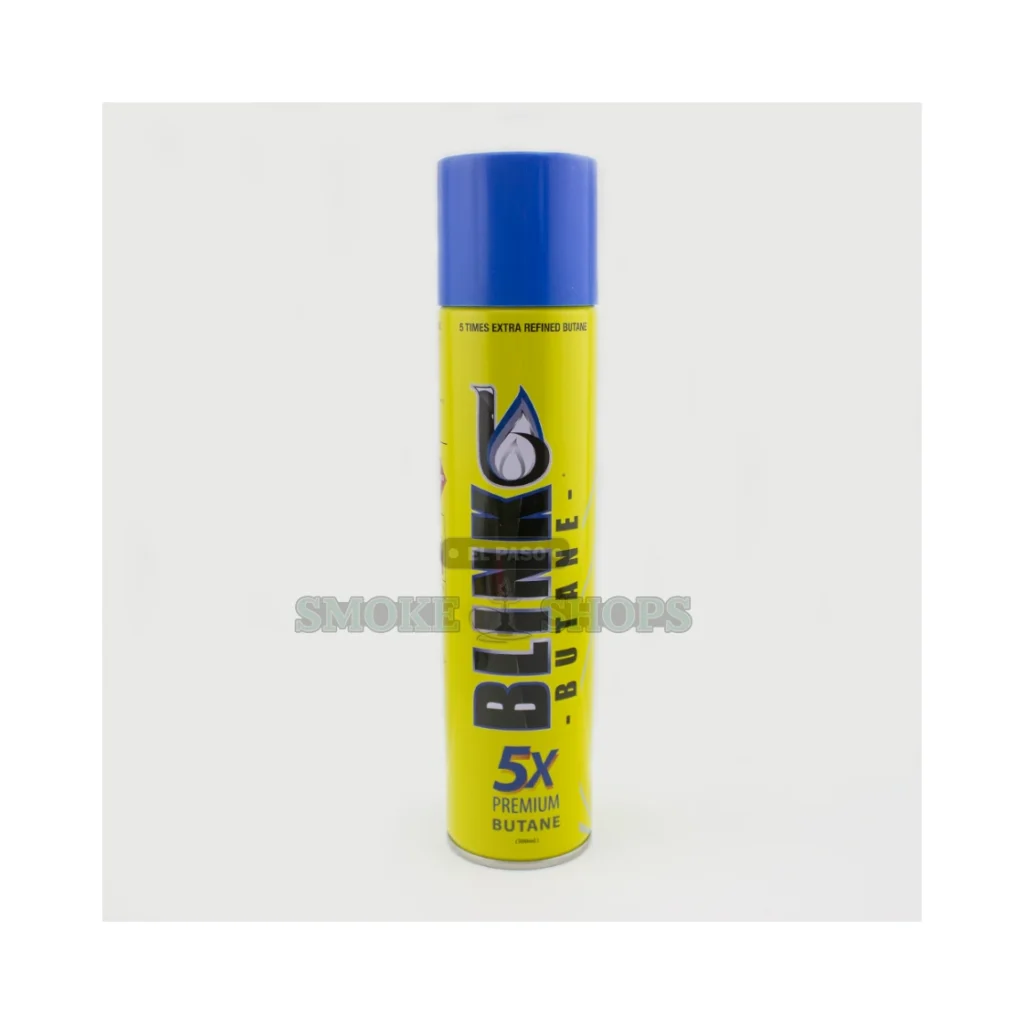
| 5x (yellow can) | Filtered five times | Solid everyday fuel with low residue. Reliable for standard refillable pocket lighters and basic single-flame torches. | Everyday pocket lighters and casual users topping off now and then. |
| 7x (brown-orange can) | Filtered seven times | Lower residue than 5x, which helps a precision jet nozzle stay clean and fire consistently with regular use. | Jet and single-torch lighters used often, or anyone whose lighter has started to sputter on cheaper fuel. |
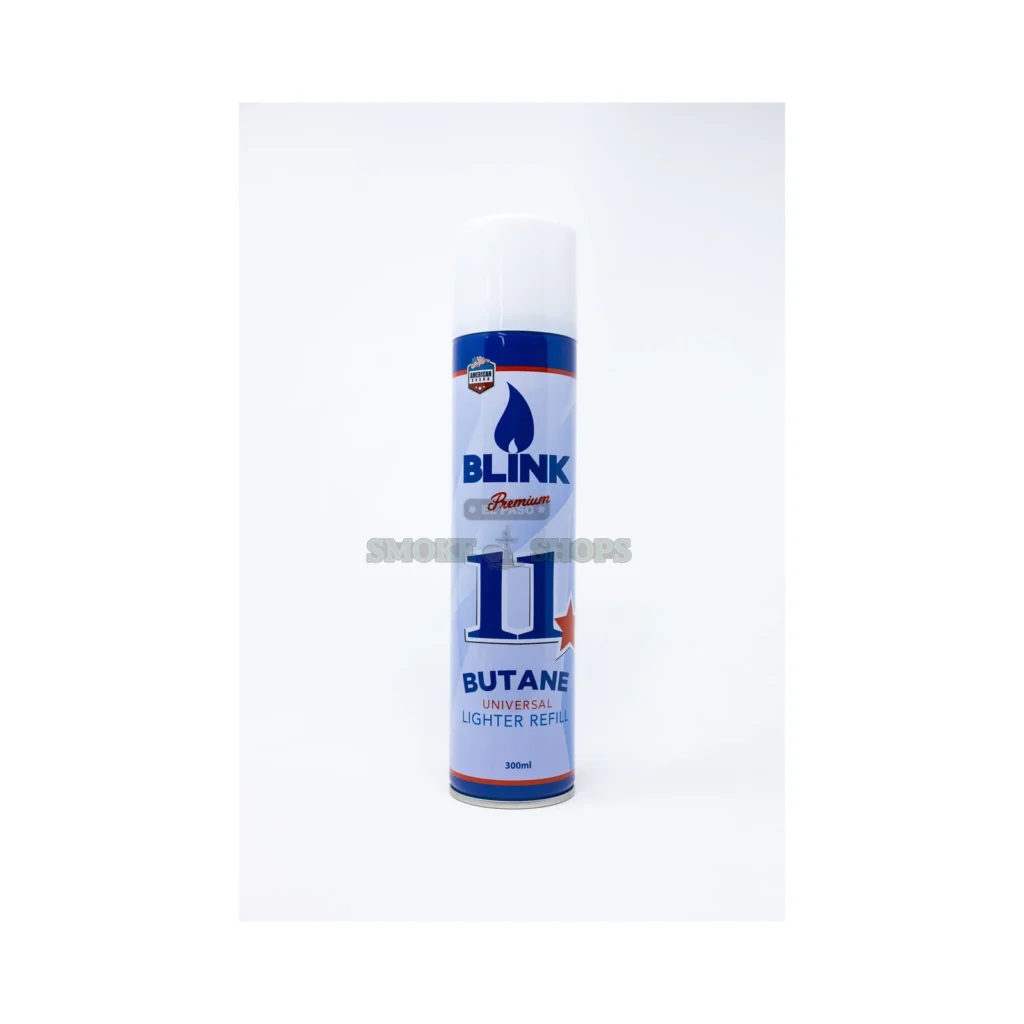
| 11x (blue can) | Filtered eleven times | The most filtered of the three, leaving the least residue. Best protection for fine multi-jet valves that are sensitive to buildup. | Premium and multi-flame torches, dab torches, and gear you want to keep firing crisp for the long haul. |
The short version: the busier and finer your torch, the higher the grade is worth it. A simple pocket lighter does fine on 5x, while a multi-jet torch you use daily rewards you for stepping up to 7x or 11x.
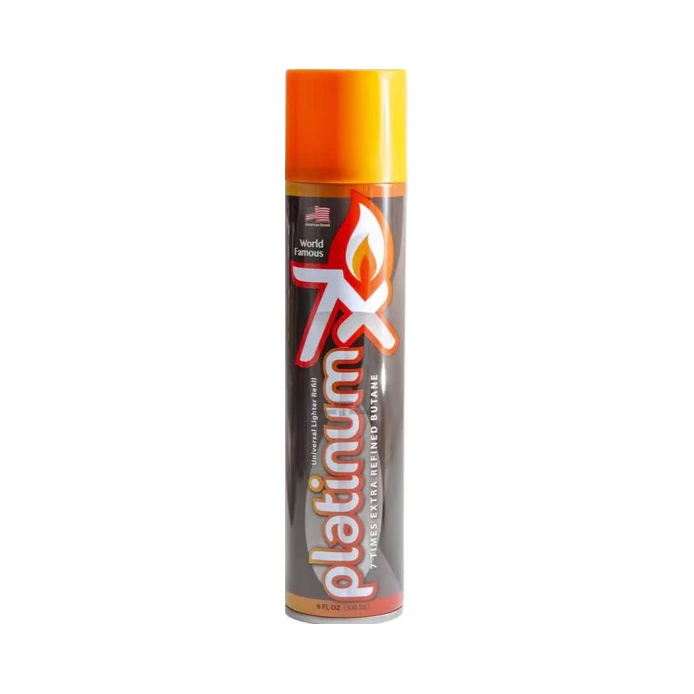
Blink Butane Refill (5x, 7x, 11x)View in El Paso
What is in the Blink Butane 300ml refill?
The Blink Butane can is a shop favorite because it fits almost everything Guests bring to the counter. It is a 300ml (10.14 oz) aluminum canister of refined butane, sold in 5x, 7x, and 11x grades, and it ships with five universal nozzle-tip adapters so you are not stuck hunting for a special fitting. The precision nozzle gives you controlled, drip-free refilling whether you are topping off a pocket lighter or a torch.
| Spec | Detail |
|---|---|
| Brand | Blink |
| Volume | 300 ml (10.14 oz) |
| Material | Refined butane (light hydrocarbon gas) |
| Refinement grades | 5x, 7x, or 11x per variant |
| Canister | Aluminum |
| Color by grade | 5x yellow, 7x brown-orange, 11x blue |
| Nozzle adapters | 5 universal nozzle tips included |
| Compatible with | Refillable gas lighters and torches |
The five included nozzle tips are the standout feature. They make a single can compatible with most refillable lighters and torch styles, so you pick the refinement grade that suits your gear and you are set. You will find it alongside the rest of our fuels in the Butane & Kerosene aisle.
Butane, propane, or kerosene: which fuel does your lighter take?
Use the fuel your lighter is built for, because the three common options are not interchangeable. Butane is a pressurized gas for nozzle-fed lighters and torches, propane runs at a much higher pressure suited to camp stoves and large outdoor torches, and kerosene or naphtha lighter fluid is a liquid you pour onto a wick. Putting the wrong one in is the fastest way to gunk up a good lighter.
| Fuel | Form | Best for | Notes |
|---|---|---|---|
| Butane | Pressurized gas, sold in refill cans | Torches, jet lighters, refillable pocket lighters | Steady flame and the standard for most modern lighters. |
| Propane | Pressurized gas, much higher pressure | Camp stoves and large outdoor torches | Too much pressure for small pocket lighters. Not interchangeable. |
| Kerosene / lighter fluid | Liquid you pour onto a wick | Wick lighters like a classic flip-top | Soaks a cotton wick. Used in fluid lighters, not butane jets. |
The simplest test: if your lighter has a small fill valve on the bottom, it takes butane. If it has a cotton wick and a flint wheel you can see, it takes liquid lighter fluid. For a deeper dive on wick fuels, read our guide to kerosene versus lighter fluid for your Zippo. We carry both fuel types, so bring your lighter in and a Host will match it on the spot.
Where can you buy refined butane in El Paso?
You can buy refined butane at any of our 9 El Paso Smoke Shops, ready for same-day in-store pickup. Browse the Butane & Kerosene category to see what is in stock near you, then swing by and grab it. If you are not sure which grade or fuel your lighter needs, bring the lighter in and a Host will help you match the can and even show you the bleed-and-fill technique at the counter. Because butane is a flammable fuel with ground-shipping restrictions, we keep it on the shelf for in-store pickup only, so you walk out with a full can the same day.


