

What is a reagent test kit, and what does it actually tell you?
A reagent test kit tells you the likely identity of a substance, or whether it carries a dangerous adulterant, by triggering a color change you read against a chart. It is a presumptive screening tool, not lab confirmation. The reagent reacts with whatever is in the sample and produces a color, and that color points toward one substance or family of substances rather than another. This is why the category is described as harm reduction: it helps a Guest spot something unexpected before a decision is made, not certify exactly what is in front of them.
All three Test Kit Plus reagents we carry state plainly that results are never 100 percent conclusive and can be thrown off by lighting, impurities, and unwanted substances in the sample. Treat a reagent result as a strong signal, never a guarantee.
How do reagent kits work? The color reaction in 60 seconds
Reagent kits work by chemical reaction: the reagent liquid changes color when it contacts certain compounds. To run a test, you place a small amount of sample in the testing vial and add one to two drops of reagent. The color develops within seconds to about 30 to 60 seconds, and you compare it against the included color reaction chart. The reaction is read on the test surface, not by looking at the bottle.
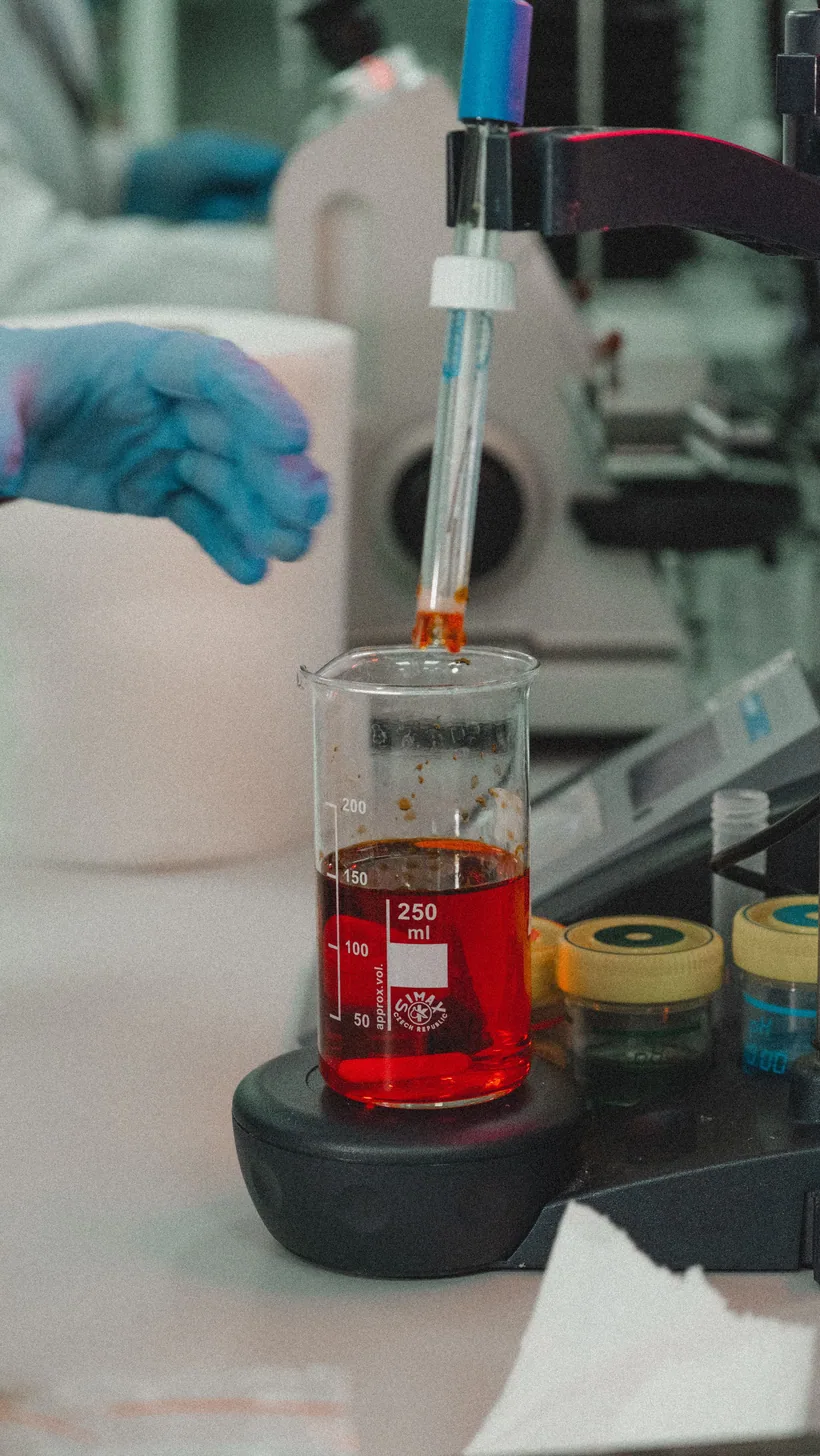
One detail trips up a lot of first-time Guests: reagent fluid naturally darkens over time. A bottle that has gone amber or brown with age is normal and does not mean the kit is spent. You judge by the color the reaction produces, not the color of the stored liquid.
What comes in a Test Kit Plus reagent kit?
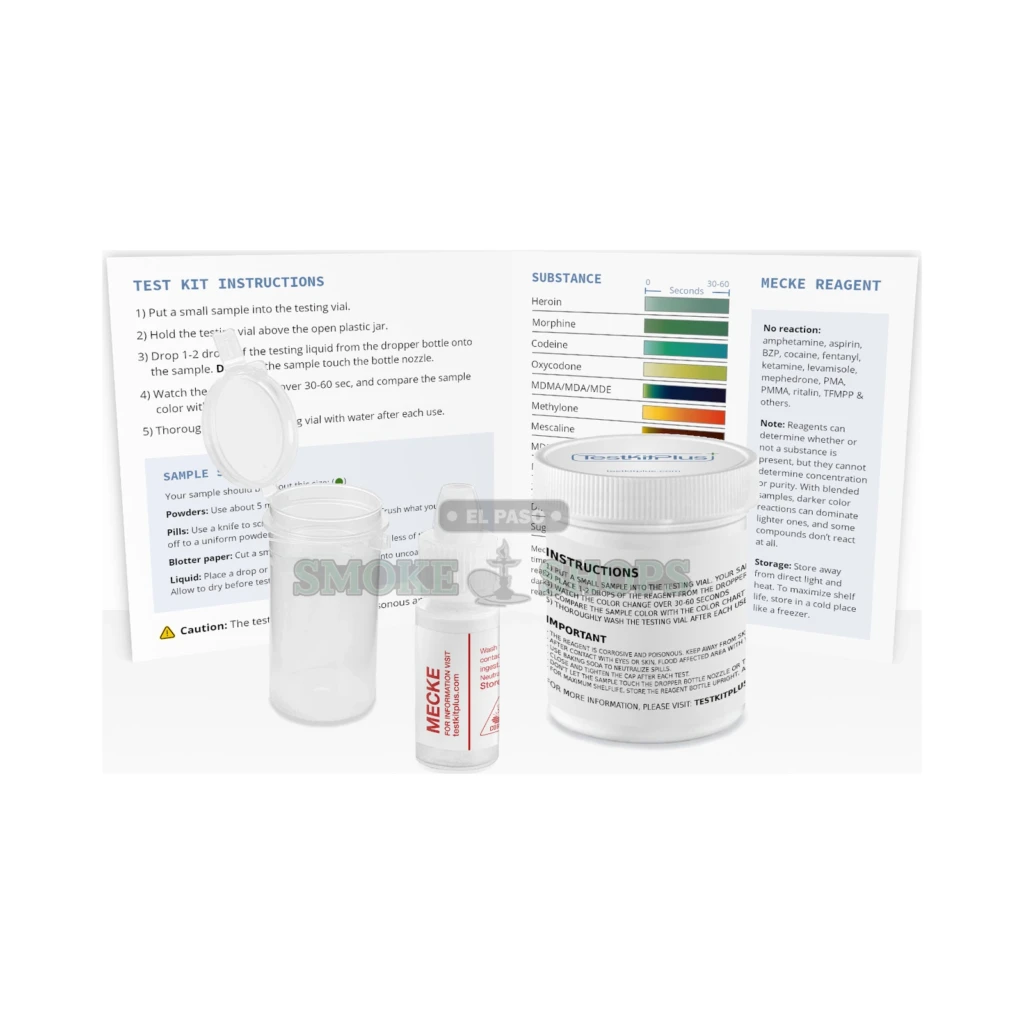
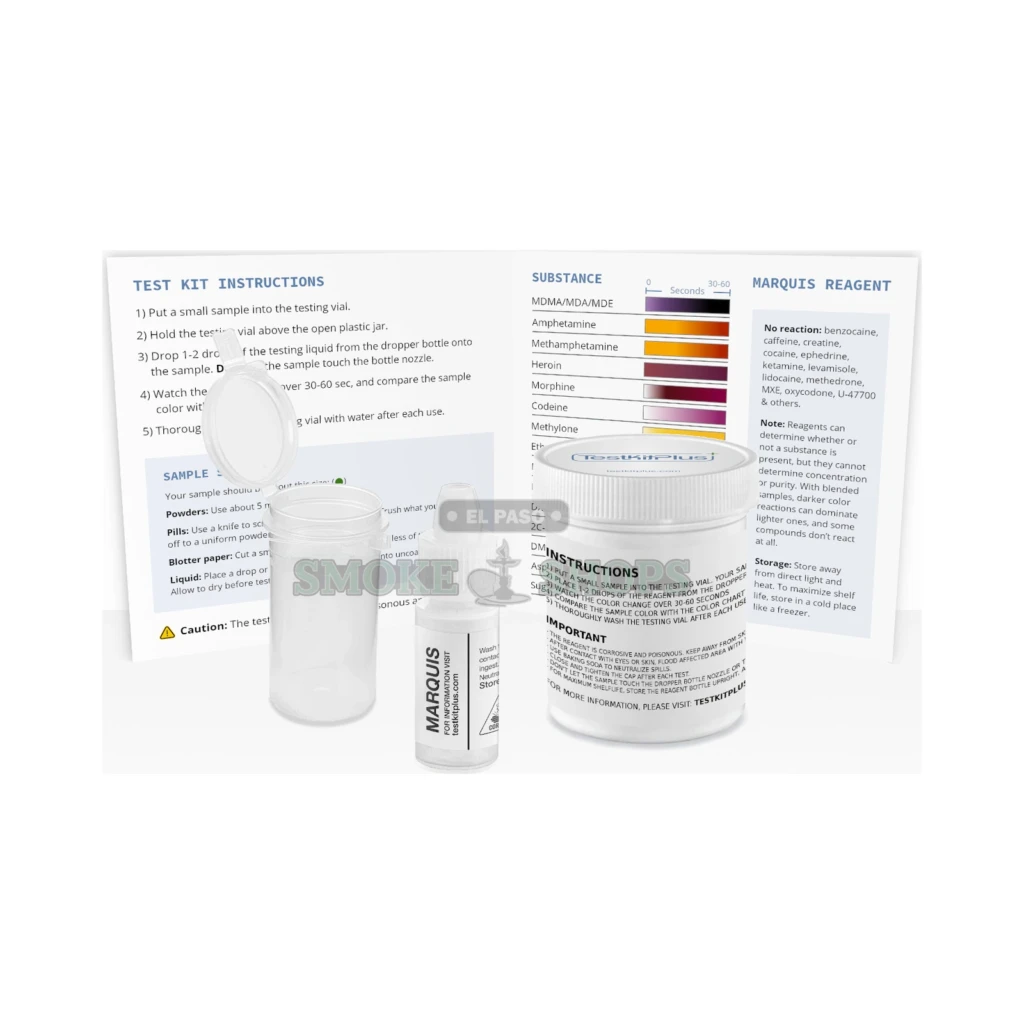
Each single Test Kit Plus reagent ships with everything needed to run a test. Inside the box you get a bottle of testing fluid, a color reaction chart with instructions, a reusable testing vial, and a protective child-resistant storage and transport jar. The reagents are supplied as a liquid, and the bottles come in two sizes: Regular, good for up to 100 tests, and Large, good for up to 200 tests. So a single bottle covers many tests, not one.
Marquis, Mecke, or Mandelin: which reagent do I need?
The reagent you need depends on the substance you are checking. Each one is a primary screen for a different group, which is why serious users keep more than one on hand.
| Reagent | Primary screen | Also reacts with / notable for |
|---|---|---|
| Test Kit Plus Marquis Reagent Test | MDMA, methamphetamine and amphetamines, synthetic cathinones | 2C-B, 2C-E, 2C-I, amphetamine, codeine, DMT, MDA, mescaline, morphine, oxycodone and others |
| Test Kit Plus Mecke Reagent Test | Opiates such as heroin, morphine, codeine | MDMA, DMT, 2C compounds, 25I-NBOMe, DXM, MDA, methamphetamine, oxycodone; often paired with Marquis and Mandelin |
| Test Kit Plus Mandelin Reagent Test | MDMA, meth and amphetamine | Flags the dangerous PMA and PMMA adulterants; also ketamine, levamisole, lidocaine, benzocaine, MDA |
If you are checking something thought to be MDMA, the Test Kit Plus MDMA Purity Test pairs naturally with Marquis as a starting screen, with Mecke and Mandelin available for cross-confirmation.
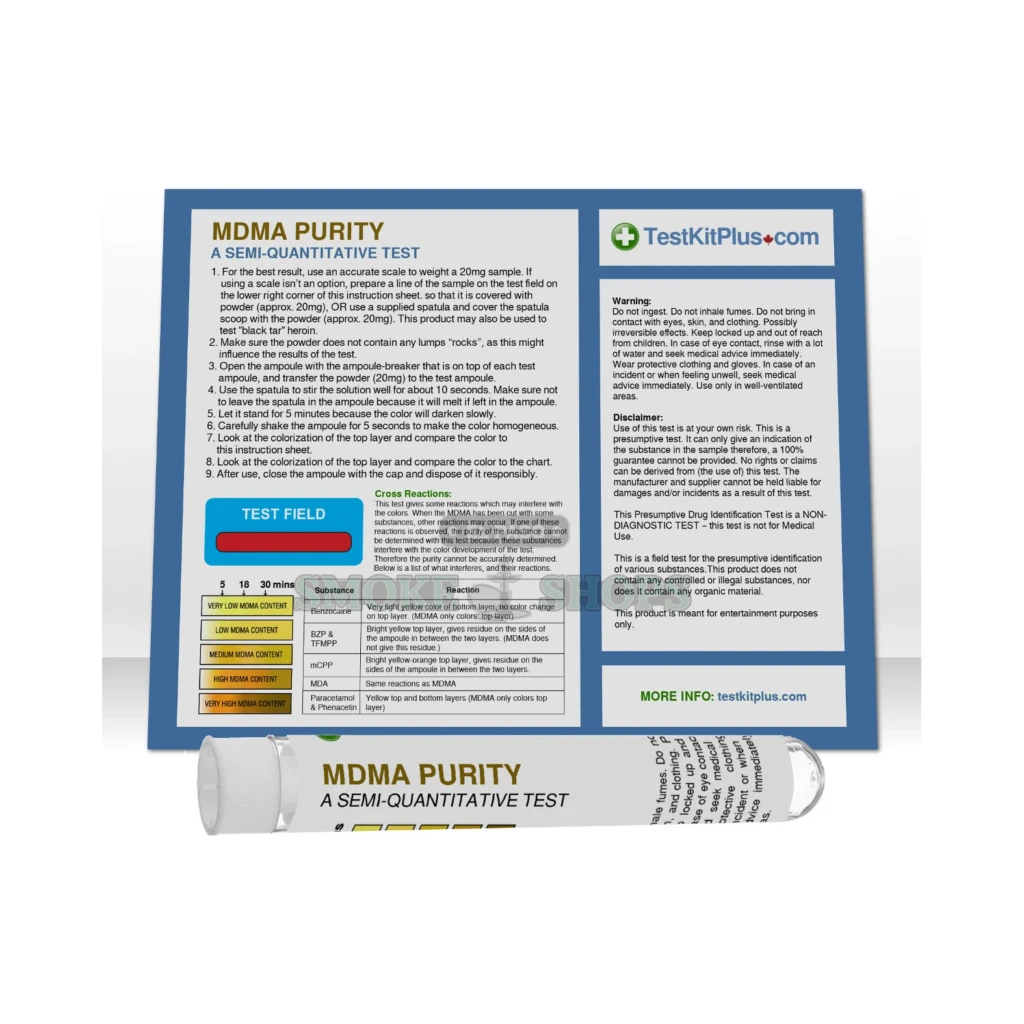 MDMA Purity TestEl PasoView in El Paso
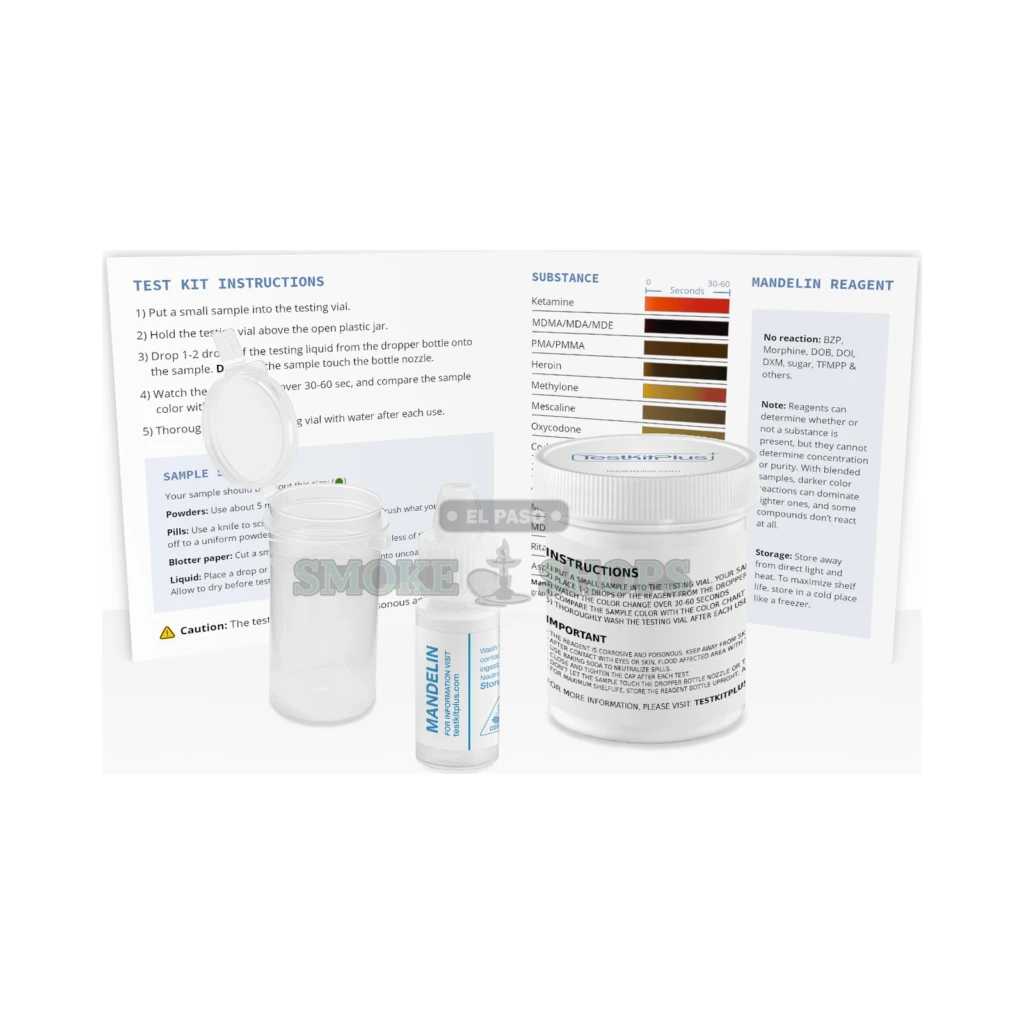 Mandelin Reagent KitEl PasoView in El Paso
How do I read the color chart correctly?
You read a reagent result by comparing the developed color against the chart that came with that specific reagent, under good lighting, at the moment the reaction finishes. Two things matter most. First, lighting: judge the color in clear, neutral light, since the kits themselves note that lighting can affect what you see. Second, timing: the color develops within seconds to about a minute, so read it as it forms rather than long after.
Remember the darkened-fluid rule. The stored reagent gets darker with age, but you score the test by the reaction on the surface against the chart, not by the bottle. A faded-looking bottle and a vivid reaction are perfectly normal together.
Why use more than one reagent for cross-confirmation?
Using more than one reagent narrows the answer, because each reagent reacts differently to the same substance. A single color can be ambiguous, since several compounds may produce a similar reaction with one reagent. Running the same sample against a second and third reagent gives you a pattern of colors, and a matching pattern across Marquis, Mecke, and Mandelin is far more telling than any one result alone. That is exactly why Mecke is commonly paired with Marquis and Mandelin, and why multi-reagent sets exist. For adulterant safety, Mandelin earns its place because it is specifically noted for flagging PMA and PMMA, two adulterants that a single Marquis screen might not clearly reveal.
Checking purity vs. checking for cuts: where the Cocaine tests fit
Purity tests estimate how strong a sample is, while cut tests look for what has been added to it. These are two different questions, and Test Kit Plus sells a product for each. The Test Kit Plus Cocaine Purity Test uses about a 20 mg sample and produces a layered result: a darker brown lower layer indicates higher purity and a lighter brown indicates lower purity, read against the included chart. It is designed not to react to common cocaine-family cuts such as lidocaine, benzocaine, procaine, or to mannitol, so those fillers do not skew the purity reading. It is offered as a single test or a 10-tests-per-box.
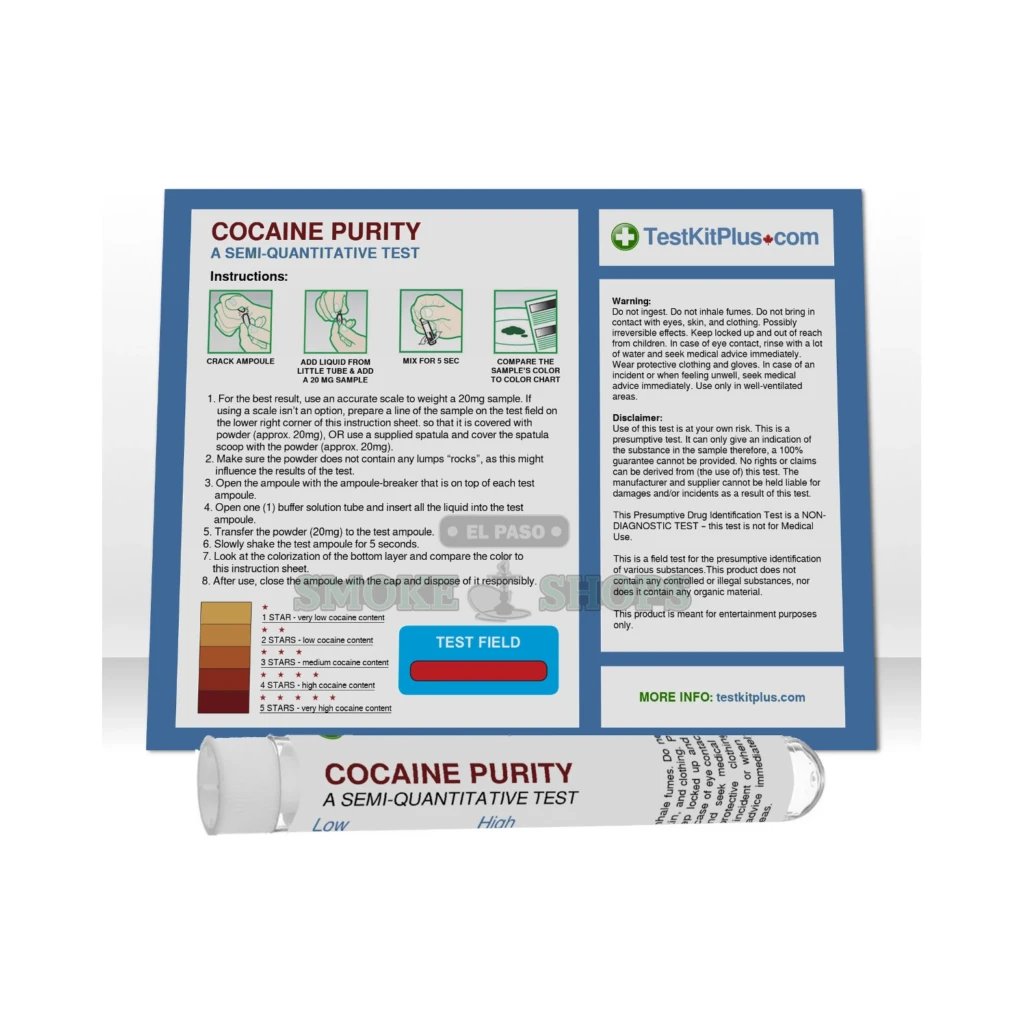 Cocaine Purity TestEl PasoView in El Paso
The Test Kit Plus Cocaine Cut Test takes the opposite angle and focuses on identifying adulterants and cutting agents in a sample. Run together, a purity test and a cut test give a fuller picture than either alone.
How accurate are reagent tests, and what are their limits?
Reagent tests are accurate as presumptive screens but are explicitly not definitive. Every Test Kit Plus reagent states results are never 100 percent conclusive. The known limits are lighting, which can change how a color appears; impurities, which can muddy a reaction; and unwanted substances in the sample, which can mask or mimic a target. A reagent will tell you that something looks consistent with, or inconsistent with, an expected substance. It will not give you a percentage, a court-ready certificate, or a medical conclusion. That is the honest ceiling of the technology, and it is why cross-confirmation with multiple reagents is recommended.
How long do reagent kits last and how should I store them?
Reagent fluid keeps best stored cool, dark, and sealed in its child-resistant jar, away from heat and light. The fluid naturally darkens over time, which is expected and not a sign the kit has failed; you still read results by the reaction on the test surface against the chart. Keep the child-resistant storage and transport jar closed when the kit is not in use, and store it well out of reach of children and anyone who should not handle it.
Are reagent test kits legal to buy in Texas?
Yes. Reagent and purity test kits are sold as safety and harm-reduction tools, and at El Paso Smoke Shops they are available to adults 21 and up for same-day in-store pickup only. We describe each kit factually by what it screens for, how the color reaction works, and how many tests a bottle provides. We make no claims about passing, beating, or evading any test, and we offer no diagnosis or accuracy guarantees beyond what each brand states.
How to pick up reagent kits at El Paso Smoke Shops
To get a reagent kit, browse the Drug Tests category, choose the reagent or purity test that matches what you want to check, and pick it up the same day at the El Paso store nearest you. Our Hosts can point Guests toward the right starting reagent and explain cross-confirmation if you want more than one. Bring a valid 21-plus ID, since all items are in-store pickup only for adults 21 and up. Whether you want a single Test Kit Plus Mecke Reagent Test or a Marquis, Mandelin, and cocaine purity set for fuller checking, our Hosts will get you set up.


