

A digital pocket scale drifts over time. A drop, a change in temperature, low batteries or a trip in a backpack can all throw it off by a few tenths of a gram. Calibration resets it against a known weight, and it takes less than a minute. This guide covers how to calibrate a digital scale, which calibration weight your scale needs, and what to look for in a milligram scale. Our Hosts set these up for Guests at the counter every day. Everything here ships, and you can also pick it up at any of our El Paso stores.
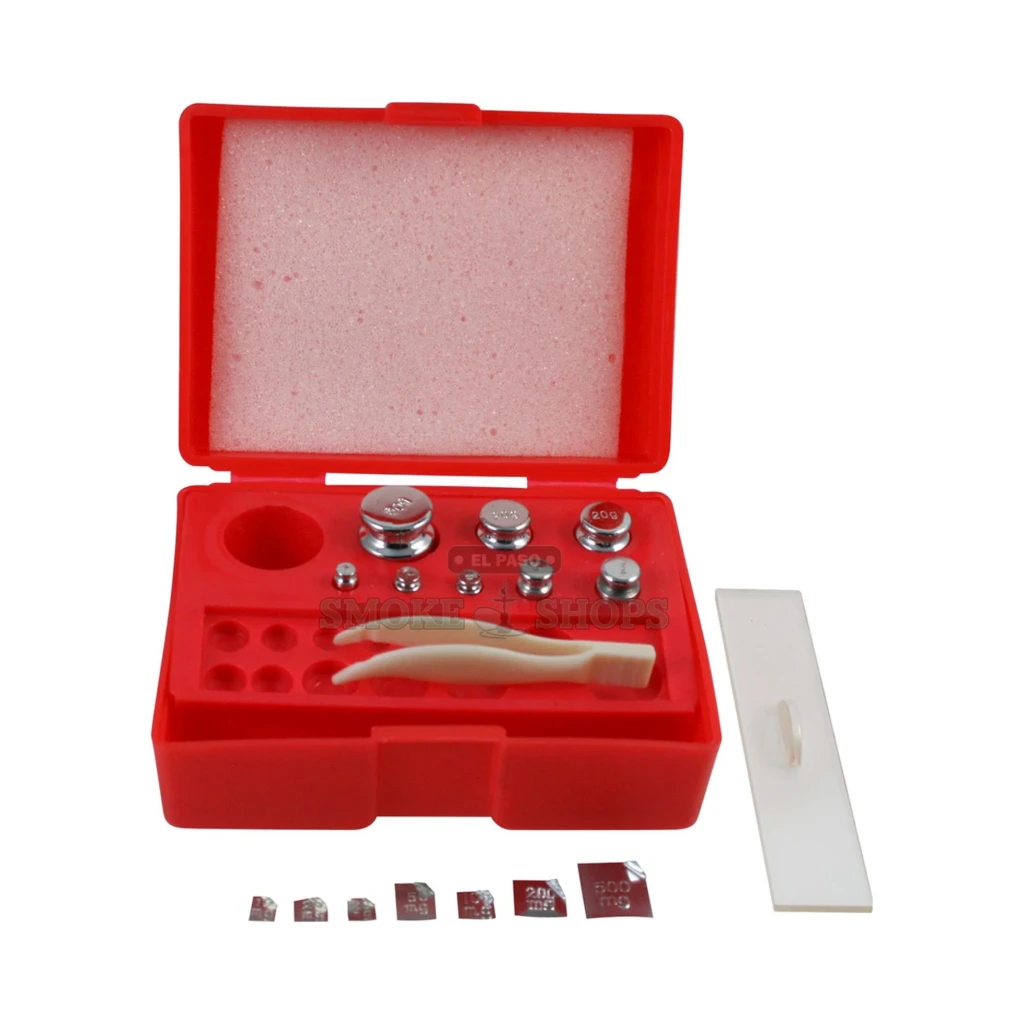
How to calibrate a digital scale, step by step
- Set it on a hard, level surface. A table or counter, away from fans, vents and phones. A soft or tilted surface gives a wrong reading.
- Turn it on and wait 30 seconds. Let the scale and the weight both reach room temperature. A scale that just came in from a cold car needs longer.
- Check that the tray is empty and reads zero. Press TARE or ZERO if it does not.
- Enter calibration mode. On most pocket scales you hold the MODE or CAL button for a few seconds until the screen shows CAL. Some models ask you to press it again to confirm.
- Place the weight the screen asks for. The display flashes the weight it needs, such as 100.00 or 500.0. Set that exact weight gently in the centre of the tray.
- Wait for PASS. The scale shows PASS and returns to normal weighing. Take the weight off, put it back on, and confirm the reading matches.
The button names differ a little between brands, so keep the manual. If you have lost it, the model number on the bottom of the scale will find it on the maker’s website.
Which calibration weight does my scale need?
Use the weight your scale’s manual names. A scale will only accept the weight it was programmed for. As a guide, most scales calibrate at or near their full capacity:
| Scale type | Typical capacity | Usual calibration weight |
|---|---|---|
| Milligram scale (0.001 g) | 20 g or 50 g | 10 g and 20 g, often included in the box |
| Precision pocket scale (0.01 g) | 100 g | 100 g |
| Precision pocket scale (0.01 g) | 200 g | 100 g or 200 g |
| Pocket scale (0.1 g) | 500 g to 650 g | 500 g |
| Pocket or kitchen scale (0.1 g) | 1000 g | 500 g or 1000 g |
If you own more than one scale, a weight kit usually costs less than buying single weights and covers them all.
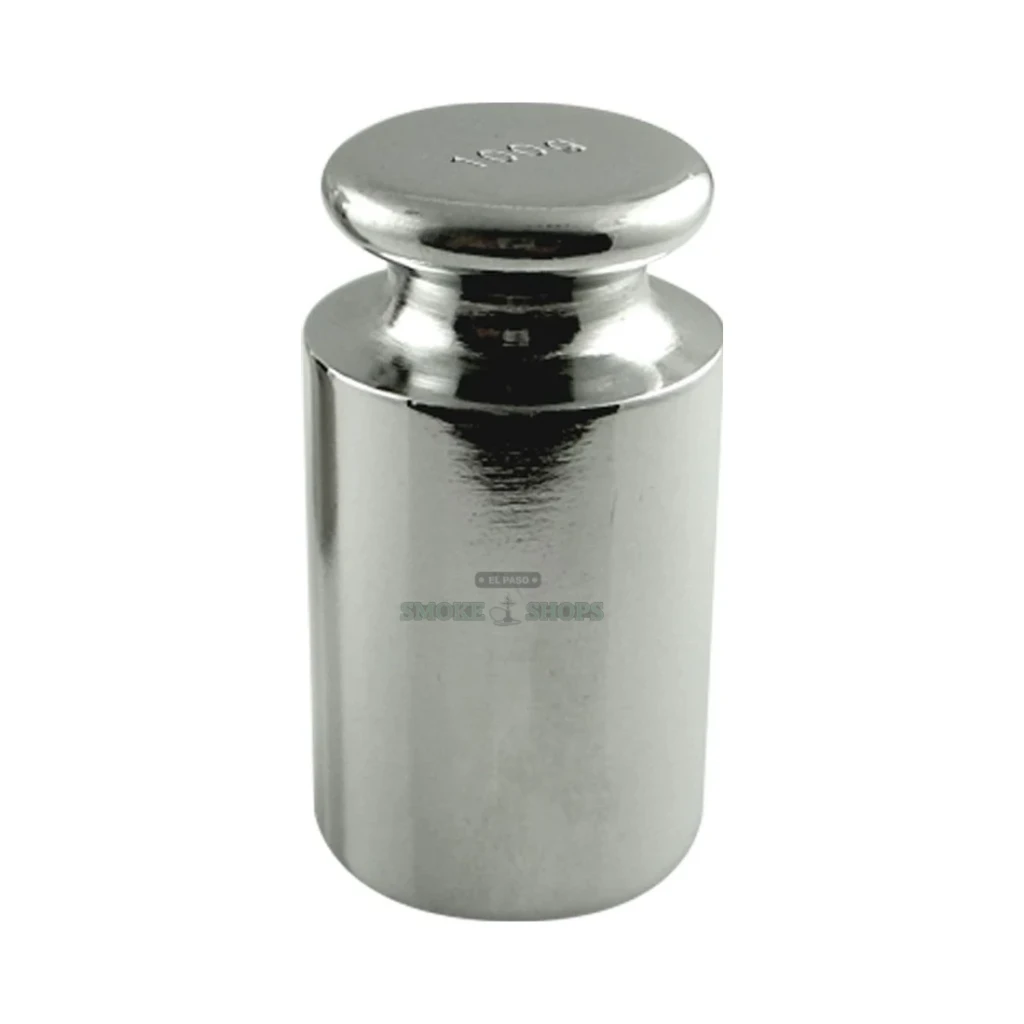 AWS 100 Gram Calibration Weight$5.99 · View
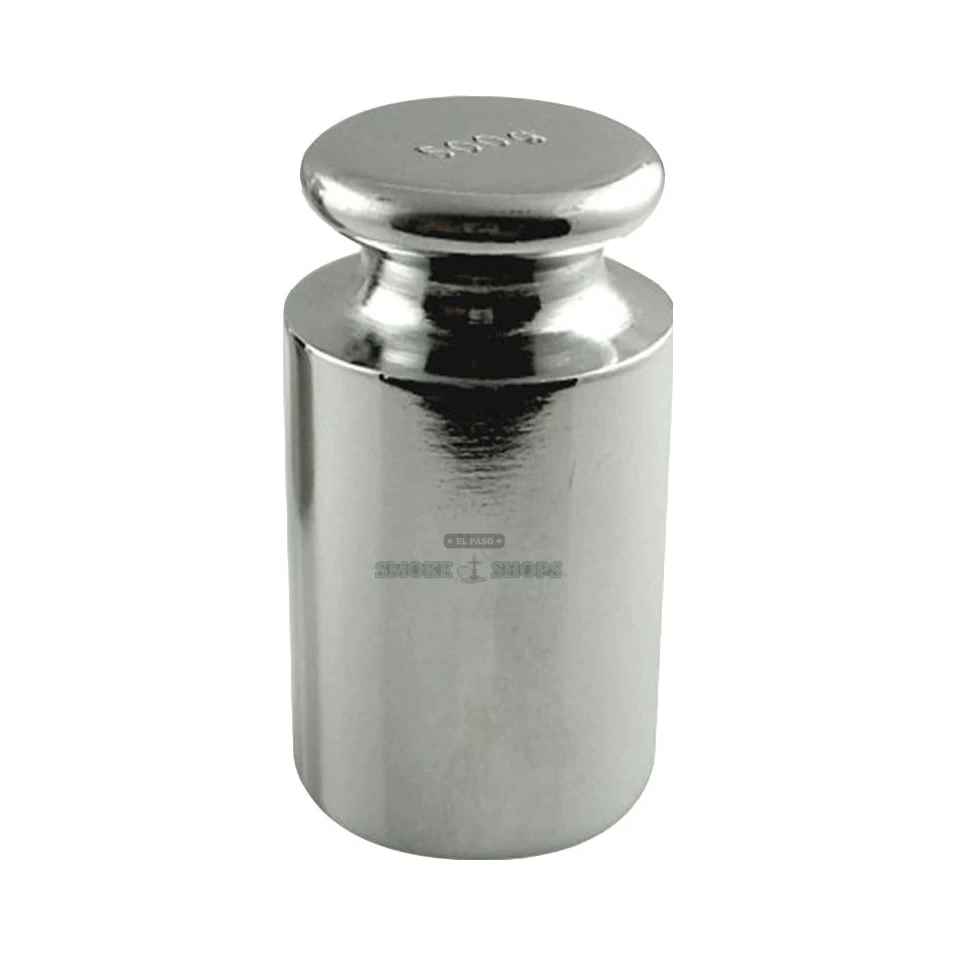 AWS 500 Gram Calibration Weight$13.99 · View
AWS 14-Piece Calibration Weight Kit$24.99 · View
 US Balance 1000 g Calibration Weight Set$34.99 · View
What does “Class M2” mean on a calibration weight?
It is an accuracy grade from the international weights standard (OIML). It tells you how far the weight is allowed to be from its stated value. For Class M2:
| Weight | Allowed error (Class M2) |
|---|---|
| 50 g | plus or minus 0.010 g |
| 100 g | plus or minus 0.016 g |
| 200 g | plus or minus 0.030 g |
| 500 g | plus or minus 0.080 g |
| 1000 g | plus or minus 0.160 g |
That is accurate enough for pocket and kitchen scales that read to 0.1 g or 0.01 g, which is what most people own. A milligram scale reads ten times finer, so use the weights that came with it, and keep them clean and in their case.
Can I use coins to calibrate a scale?
You can use them to check a scale, but not to calibrate it. A US nickel weighs 5.000 g when new, and a penny made after 1982 weighs 2.500 g. If your scale reads a nickel as 5.0 g, it is in good shape. Coins wear down and pick up dirt, though, and no scale has a calibration mode that asks for 5 g. For the calibration itself you need a proper weight.
How to keep a calibration weight accurate
- Handle it by the knob or with the tweezers from the kit. Skin oil adds weight over time.
- Store it in its case, dry, and do not drop it. A dent or rust changes the weight.
- Do not clean it with anything abrasive. Wipe it with a soft dry cloth.
What to look for in a milligram scale
A milligram scale reads to 0.001 g, one thousandth of a gram. People use them for jewellery, coins, supplements, reloading and lab work at home. Three things matter:
- Capacity. Most hold 20 g. A 50 g model costs more and suits heavier items.
- A draft shield. At this precision, moving air changes the reading. A lid or shield over the tray is worth having.
- Included weights. Good milligram scales come with their own calibration weights and tweezers. Check before you buy.
Expect the last digit to move by one or two counts between readings. That is normal for any milligram scale at this price. For anything where an exact amount matters to your health, weigh more than once and do not rely on a single reading.
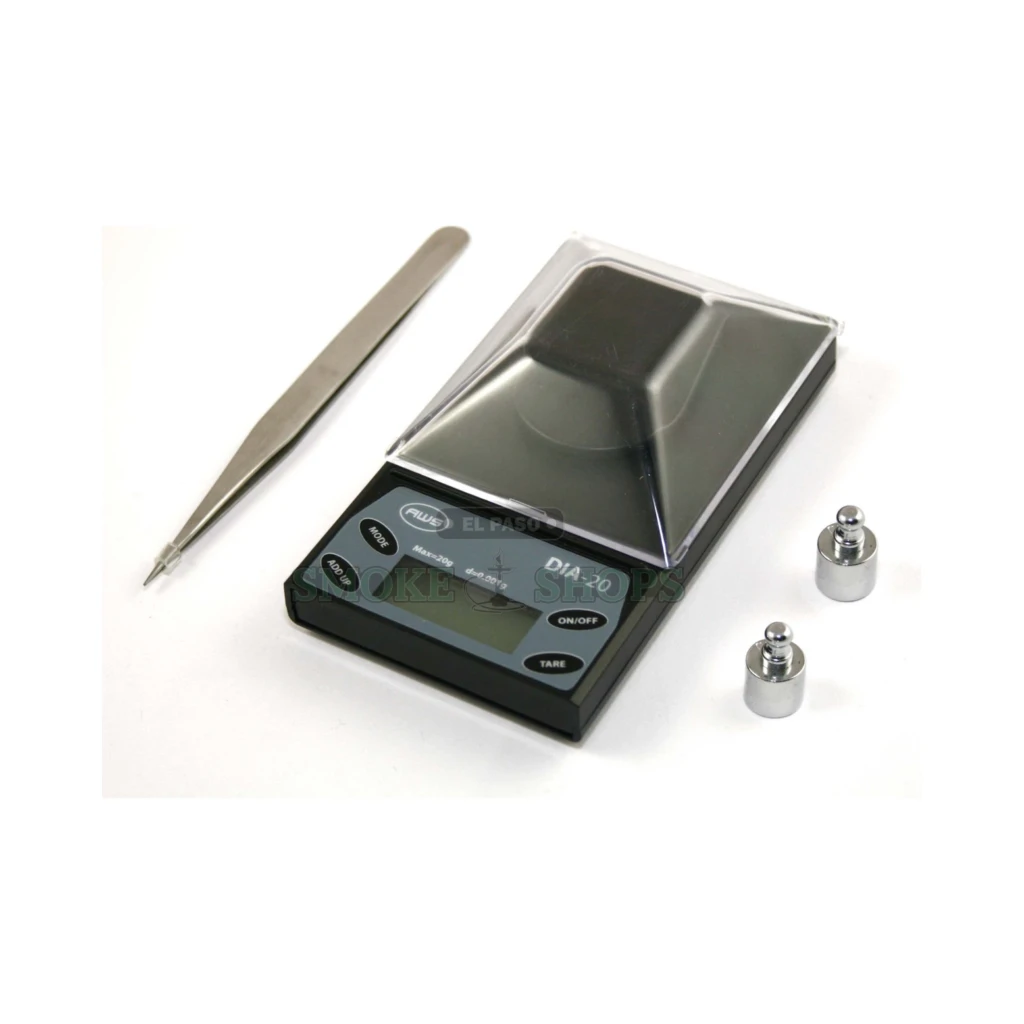 AWS DIA-20 Milligram Scale, 20 g x 0.001 g$44.99 · View
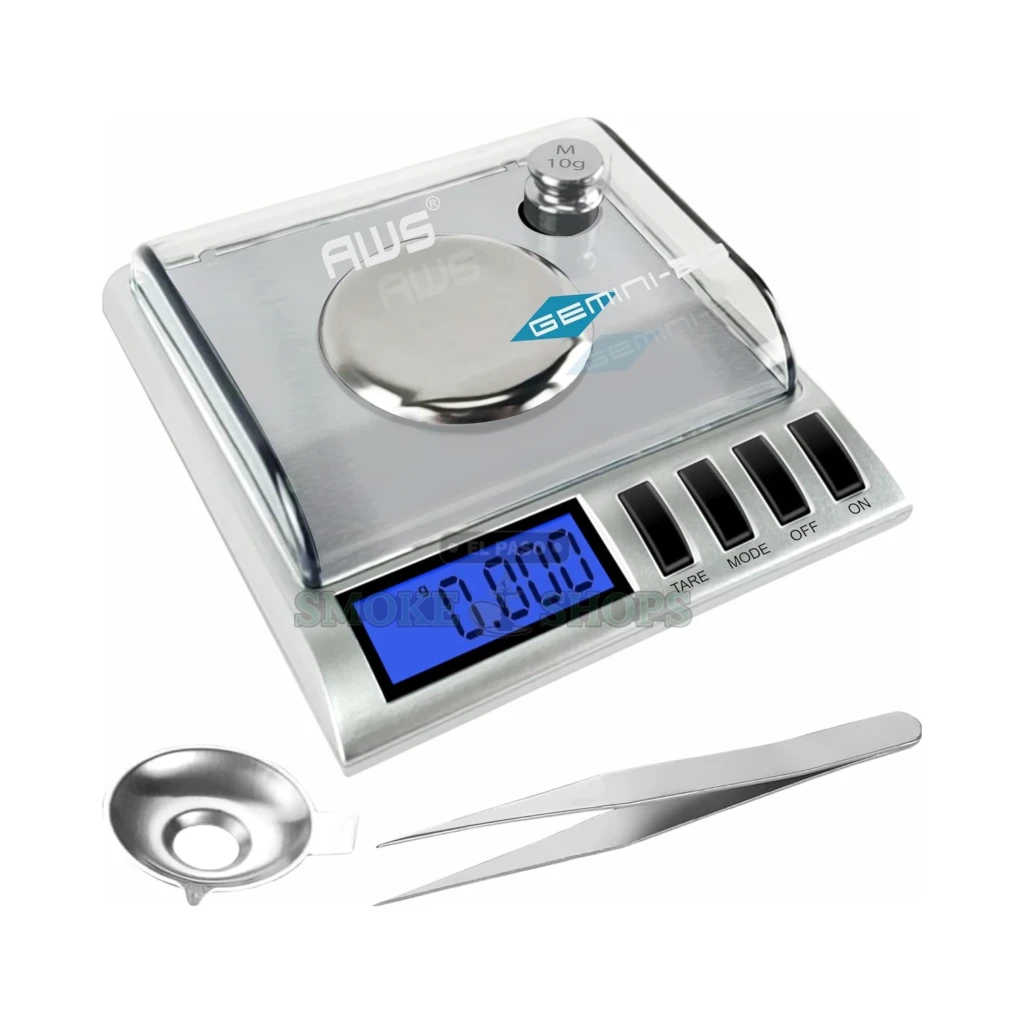 AWS Gemini-20 Milligram Scale, 20 g x 0.001 g$57.99 · View
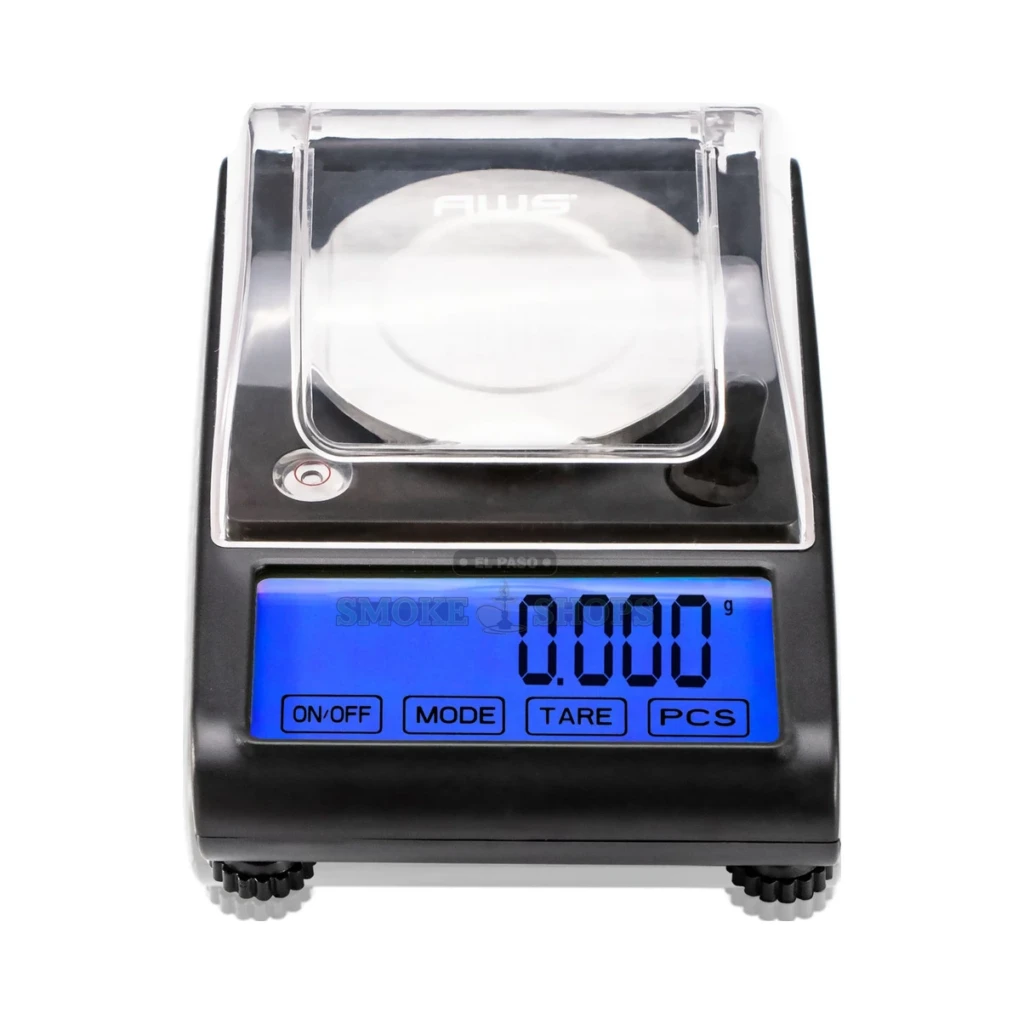 AWS ZEO-50 Milligram Scale, 50 g x 0.001 g$74.99 · View
Why does my scale still read wrong after calibrating?
- Low batteries. This is the most common cause. Fit fresh ones and calibrate again.
- The surface. Move to a hard, level table away from air movement.
- The wrong weight. A scale that asks for 500 g will not calibrate correctly with 200 g.
- Overload damage. A scale that has been dropped, or loaded past its capacity, may have a damaged sensor and need replacing.
Browse all scales and calibration weights


